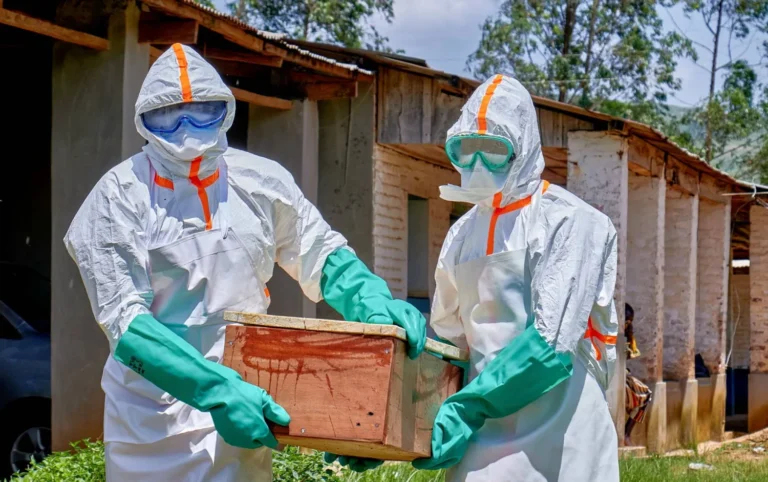
Nairobi, Kenya – In a significant legal move, Kenya’s Supreme Court temporarily halted the implementation of a joint agreement with the United States to establish an Ebola quarantine facility in Kenya. This comes amid growing concerns about the impact of the virus outbreak in East Africa.
Strict judicial decision
According to Bloomberg, Judge Patricia Nyaounde issued a ruling prohibiting Kenyan authorities from “receiving, transporting, admitting, or facilitating the entry into Kenya of persons who have been exposed to or infected with the Ebola virus” under arrangements agreed upon with Washington.
The court is scheduled to resume hearing the case on June 2nd. At that time, the parties will present their oral arguments.
Legal and popular motives
This legal action came in response to a lawsuit filed by the Katiba Institute for Human Rights, which argued that the Ebola treatment complex project was being implemented in a manner lacking transparency and constitutional accountability. The institute also pointed to the absence of adequate oversight or disclosure regarding the project’s potential health and security implications.
These developments coincide with a regional state of alert following the Ebola outbreak in the Democratic Republic of Congo, which has claimed more than 200 lives. This has prompted neighboring Uganda to close its border with Congo to prevent the spread of the disease.
US support: Capacity building or a sovereignty crisis?
On the other hand, the US State Department reaffirmed its commitment to supporting efforts to combat the virus in the region.
Following a phone call between Secretary of State Marco Rubio and Kenyan President William Ruto, Washington announced $13.5 million in funding to support Kenya’s Ebola preparedness efforts. In addition, $112 million in bilateral and regional assistance has been allocated to countries in the region.
As part of its broader strategy, the U.S. State Department announced funding for the establishment of approximately 50 COVID-19 response clinics in affected areas. It also allocated $50 million to the United Nations Office for the Coordination of Humanitarian Affairs (OCHA).
The Department further revealed the deployment of specialized medical response teams to dozens of health facilities in the Ituri, North Kivu, and South Kivu provinces of the Democratic Republic of Congo.
These developments place Kenyan authorities in a delicate position, balancing their international obligations to contain the global health crisis with domestic legal pressures demanding greater transparency and constitutional oversight of projects with serious sovereign and health implications. Meanwhile, international health authorities continue their race against time to control a rare and deadly strain of the Ebola virus that threatens the stability of neighboring countries.