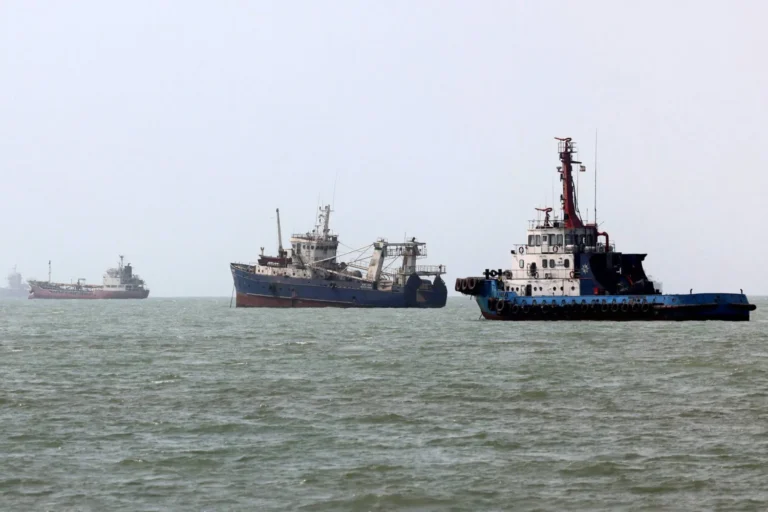
Beijing, China – Two major Chinese state-owned shipping companies have completely halted their oil tanker voyages through the Strait of Hormuz and the Bab el-Mandeb Strait due to escalating security concerns in the region. According to Reuters, citing shipping executives and tanker tracking data, COSCO Shipping and Energy Transport and China Merchants Shipping and Energy have kept their fleets away from these vital waterways since early August. The two companies together own more than 100 supertankers. Before the conflict, they transported approximately half of China’s total crude oil imports from the Middle East.
Resorting to ship-to-island and ship-to-ship transfers
Given the security risks, the two companies have turned to alternative locations outside the Arabian Gulf to receive crude oil shipments.
Data from ship-tracking firm Kpler shows a significant increase in ship-to-ship (STS) oil transfers in the Gulf of Oman. These operations exceeded 600,000 barrels per day during June and July, compared to a complete absence of such operations during April and May. A Chinese shipping executive explained that tankers are now heading—instead of transiting the Strait of Hormuz and the Bab el-Mandeb Strait—to areas near ports in Oman and the Emirate of Fujairah in the United Arab Emirates. In these areas, the cargoes are being unloaded and loaded in waters considered less risky and more profitable.
Record profits amid geopolitical risks
Despite security concerns, these shifts have generated substantial financial gains for shipping companies. The daily cost of transporting oil on the Oman-China route is estimated at $140,000. This translates to a net profit margin of approximately $110,000 per day for each supertanker. This figure represents a dramatic increase compared to pre-war levels. Prior to the war, the average daily profit for a supertanker on similar routes ranged between $30,000 and $40,000. According to the report, approximately 12 supertankers belonging to each of the two companies are scheduled to load between August and mid-September. Operations are primarily concentrated in the ports of Fujairah and Oman, and the surrounding territorial waters.