
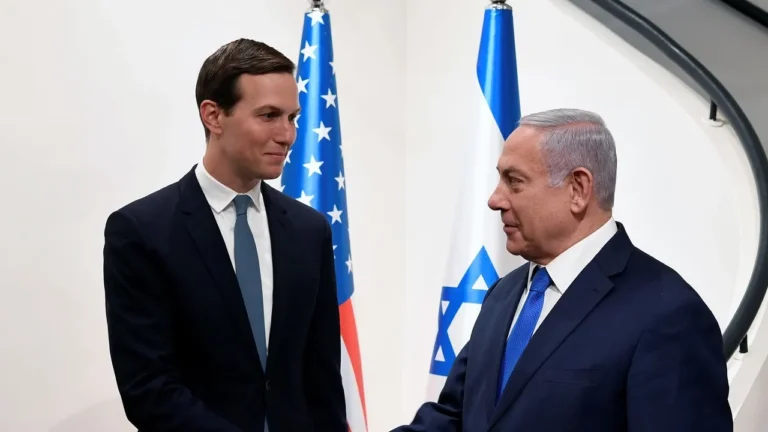
Abu Dhabi, UAE – Israeli Prime Minister Benjamin Netanyahu’s meeting with Jared Kushner, US President Donald Trump’s envoy, on August 17, 2026, was more than just a discussion of Gaza’s future; it also revealed the direct involvement of Israeli public opinion in the negotiations. According to Axios, Netanyahu presented Kushner with two Israeli public opinion polls; one showing that a majority of Israelis oppose the reconstruction of Gaza before Hamas is disarmed, while the other showed support for continuing strikes against what Israel considers imminent threats in the Strip.
Polls as a bargaining chip
This comes as Washington pushes for a gradual disarmament of Hamas, paving the way for withdrawal and reconstruction, while Netanyahu insists on no withdrawal before disarmament. Netanyahu thus appeared to be sending a clear message to Kushner: “This isn’t just my wish… these are the limits the Israeli electorate is willing to accept.” But the problem is that the picture within Israel is more complex.
Netanyahu between the voter and the coalition
Recent polls show Netanyahu’s camp losing ground and struggling to secure the 61-seat majority needed to win the October 27 elections. In one recent poll, Gadi Eisenkot’s party overtook Likud, while another study revealed that 54.9% of Likud voters favor a more centrist government, while a significant proportion of party members remain committed to the current right-wing coalition. This presents Netanyahu with a dilemma: he needs to win back centrist voters, but he cannot afford to lose the right-wing base that sustains his government.
Does Netanyahu follow the polls?
The indicators don’t suggest that Netanyahu is implementing opinion polls literally, but rather that he is using them to define his political maneuvering space and justify his positions. When he needs to move closer to the center, he cites polls showing voters’ desire for a more moderate government, and when he faces American pressure regarding Gaza, he highlights polls confirming Israelis’ commitment to security and the disarmament of Hamas.
Therefore, the most important question is not: Does Netanyahu respond to opinion polls? Rather: “Does Netanyahu use opinion polls to gauge what Israelis want, or to select numbers that help him convince Washington of what he can do politically?”
Netanyahu is negotiating on three fronts simultaneously.
Washington wants to test Hamas’s intentions.
The Israeli right wing rejects security concessions.
The Israeli electorate is approaching the election date.
Amid these fronts, opinion polls have become a real bargaining chip. Netanyahu is not only negotiating with Kushner about the future of Gaza, but also about a formula he can accept in Washington without paying a price at the ballot box.