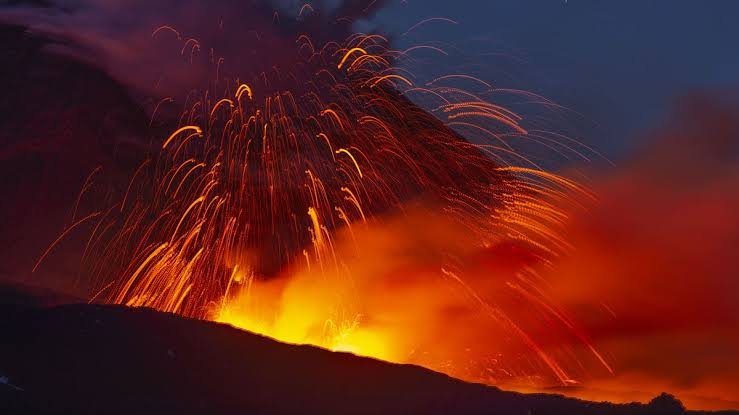
Sicily, Italy – The Italian island of Sicily has witnessed significant developments with the renewed activity of Mount Etna, one of Europe’s most famous active volcanoes. Ash and gas plumes have risen into the sky, reigniting concerns about the volcanic activity’s impact on surrounding areas. Etna’s renewed activity coincided with a period of unstable weather affecting parts of the island. Authorities and relevant agencies are closely monitoring the volcano’s developments and the potential impact of the ashfall on nearby areas and the movement of residents and visitors.
Mount Etna is known for its frequent volcanic activity, having experienced numerous eruptions and emissions of varying intensity in recent years. The nature of the volcanic region necessitates continuous monitoring, and precautionary measures must be taken when activity levels are high. In another tragic development, an American tourist’s trip to Sicily turned into a tragedy when he was struck by lightning during a thunderstorm and killed.
The tourist’s death has brought back into focus the dangers that can accompany sudden weather changes, especially in open areas and high altitudes. The risk of lightning strikes increases during thunderstorms. Authorities in Sicily are intensifying their monitoring of weather conditions and volcanic activity. Visitors are also being advised to follow safety instructions and avoid open areas or areas near potential hazards during periods of severe weather. The current situation on the island combines the force of nature—the return of Mount Etna to activity—with the sudden threat of thunderstorms. Therefore, Sicily faces simultaneous natural challenges that demand the utmost caution and preparedness.