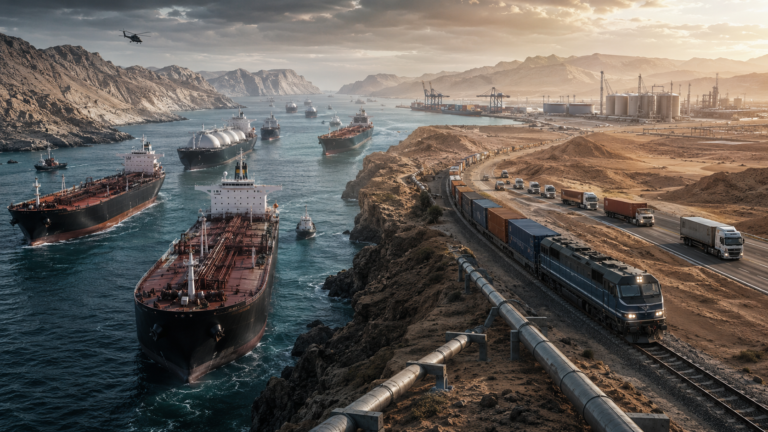
Damascus, Syria – Global energy markets continue to face mounting uncertainty as tensions between Washington and Tehran show no signs of easing. Governments across the Middle East and beyond are accelerating efforts to develop alternative routes for energy exports and international trade.
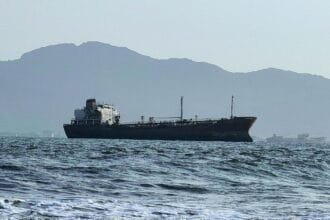
The prolonged closure of the Strait of Hormuz represents one of the most severe economic shocks in modern history.
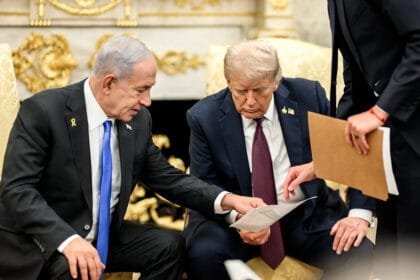
US President Trump and Israeli Prime Minister Benjamin Netanyahu moved toward military action against Iran after diplomatic efforts failed to produce a breakthrough. The escalation resulted in significant civilian casualties and has left Washington facing growing pressure to bring the conflict under control.
A complete closure has removed between 15 and 20 million barrels of oil per day from international markets. In addition, nearly 20% of global LNG trade, much of it originating from Qatar, has faced significant disruption.
Energy analysts estimate that oil prices could rapidly climb above $120–150 per barrel during an extended closure, with some worst-case scenarios projecting temporary spikes toward $180–200 per barrel if alternative supply routes fail to compensate for the lost exports.
Natural gas prices, particularly in Europe and Asia, have surged as LNG shipments are delayed or rerouted.
Inflationary Effects
Energy costs feed directly into almost every sector of the global economy. Higher fuel prices increase the cost of transportation, manufacturing, electricity generation, agriculture, and logistics.
As a result, the long-term closure of the Strait of Hormuz would likely trigger a new wave of inflation worldwide.
Economists generally estimate that every sustained 10% increase in oil prices can add approximately 0.2 to 0.4 percentage points to annual inflation rates in advanced economies, with even larger effects in energy-importing developing countries.
Consumers would likely experience rising prices across a broad range of everyday goods, including food, bread, agricultural commodities, fuel and electricity, air travel and shipping, and consumer goods dependent on global supply chains. In short, everything the average American buys “Made in China”.
Higher inflation would also force many central banks to maintain elevated interest rates, slowing investment and economic growth.
Impact on Global Trade and Shipping
The Strait of Hormuz is not only an energy corridor but also a vital artery for international commerce.
Insurance premiums for vessels operating in the Gulf would rise sharply during any prolonged crisis, while shipping companies would be forced to reroute cargoes or absorb higher security costs.
Overall Economic Losses
While the precise cost would depend on the duration of the disruption, economists generally agree that a prolonged closure could erase hundreds of billions of dollars from the global economy.
For this reason, many countries—including United Arab Emirates, Turkey, Saudi Arabia, Iraq, Egypt, and others—are accelerating investments in alternative railways, pipelines, ports, and overland trade corridors designed to reduce dependence on the Strait of Hormuz and improve the resilience of global energy supplies.
A major geopolitical and economic realignment may be taking shape across the Middle East, as Turkey, Saudi Arabia, and several regional partners explore the revival of the historic Hejaz Railway and the development of a broader overland trade network stretching from Europe to the Arabian Sea
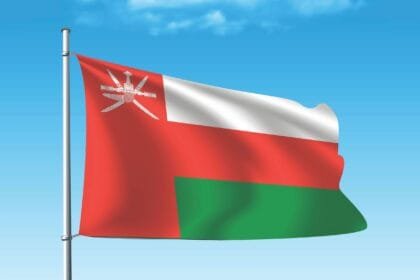
Turkey has revealed that Ankara is in active discussions with Saudi Arabia regarding the modernization and expansion of the historic Hejaz Railway, with the long-term objective of extending the line all the way to the Sultanate of Oman.
The project is envisioned not merely as the restoration of a historic railway but as the creation of a modern transportation corridor serving both commercial freight and tourism.
A Modern Revival of the Hejaz Railway
Originally constructed between 1900 and 1908 during the Ottoman era, the Hejaz Railway initially connected Damascus with Medina, eventually reaching a total length of nearly 1,900 kilometers through subsequent extensions.
The historical route is being converted into a contemporary logistics network connecting Turkey, Syria, Jordan, Saudi Arabia, and ultimately Oman.
The first phase of the modern Hejaz Railway project, we will connect a line from Turkey to Aleppo, with the Aleppo–Damascus–Jordan section already existing.
The “Development Road Project,” aims to connect Iraq’s Grand Faw Port with Turkey and onward to Europe.
The project is technically ready for implementation and will be developed as a joint venture involving United Arab Emirates, Iraq, Turkey and Qatar, creating an integrated logistics network capable of reshaping regional commerce.
A Broader Regional Vision
Constructing a new Middle Eastern order based on the principle of “regional ownership,” whereby the countries of the region assume primary responsibility for addressing their own political and security challenges without excessive external intervention.
Syria at the Center of the Corridor
A central element of the proposed trade network involves reopening the historic overland transit route through Syria.
The corridor would extend from the Bab al-Hawa border crossing in northwestern Syria, passing through Aleppo, Damascus, and Daraa before reaching the Nassib border crossing with Jordan—a route of approximately 500 kilometers.
The new route is benefiting not only Turkey’s exports but also facilitating the movement of European goods into Gulf markets and vice versa.
The corridor would require extensive security guarantees to protect shipments from extremist groups, particularly ISIS.
The success of such a project depends upon a stable legal and regulatory framework capable of attracting private investment.
Given Syria’s ongoing economic and security challenges, many analysts believe that fully restoring large-scale transit operations remains unrealistic in the immediate future.
Countering Competing Trade Routes
Some regional observers argue that significant investments in Syria’s coastal infrastructure and ports could provide a viable alternative to the proposed India-Middle East-Europe Economic Corridor (IMEC) and reduce the strategic importance of Israel’s Port of Haifa.
Under this scenario, Turkey, Saudi Arabia, and Pakistan could establish a new logistics and investment axis that might eventually gain broader international support, including from the United States.
Gulf States Seek Alternatives to the Strait of Hormuz
Parallel to these railway and highway initiatives, Gulf energy producers are accelerating efforts to develop alternative export routes that bypass the Strait of Hormuz.
As part of this strategy, Iraq intends to sign an agreement with Syria to transport, store, and handle shipments of Basra Light, Basra Medium, and Basra Heavy crude through the Mediterranean ports of Baniyas and Tartus.
A New Regional Economic Architecture
Taken together, the revival of the Hejaz Railway, the Development Road Project, expanded Syrian transit corridors, Gulf pipeline investments, and Iraq’s Mediterranean export strategy point toward the emergence of a new regional economic architecture.
If successfully implemented, these interconnected initiatives could redefine trade flows between Europe, the Middle East, and Asia, lessen reliance on vulnerable maritime chokepoints, and establish a new era of economic integration driven primarily by regional powers themselves. Whether these ambitious projects can overcome the significant political, security, and financial challenges ahead remains uncertain. However, the scale and coordination of the current diplomatic and infrastructure efforts suggest that the Middle East may be entering a new phase in which transportation corridors become as strategically important as energy resources themselves.