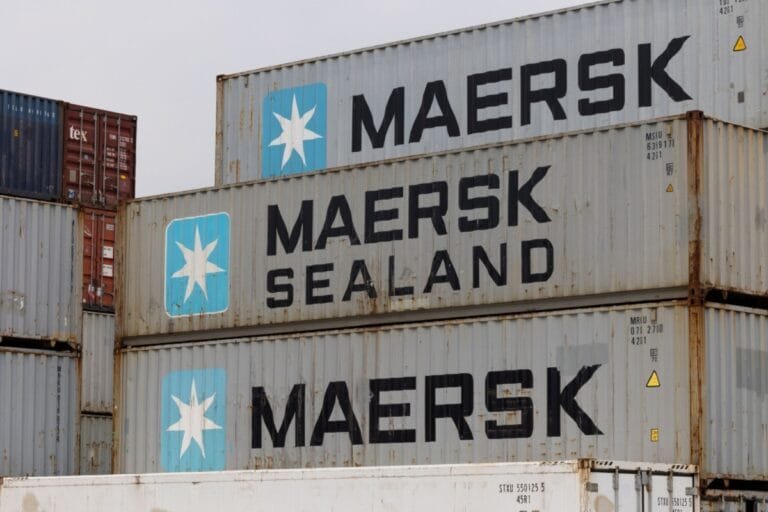
Washington, DC – In a first since the near-total shutdown of global energy routes, international shipping giant Maersk announced that its US-flagged vehicle carrier, the Alliance Fairfax, successfully departed the Persian Gulf region via the Strait of Hormuz on Monday. The vessel was escorted by US military forces.
Breaking the siege of “Hormuz”
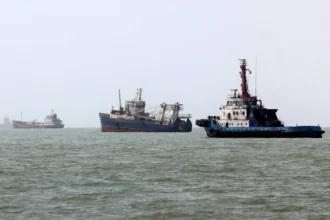
The Alliance Fairfax, operated by Maersk’s Farrell Lines, is one of hundreds of merchant vessels stranded in the Gulf since early March. The US-Israeli war with Iran brought shipping through the Strait of Hormuz to a near standstill at the time. Before the conflict, the strait carried approximately 20% of the world’s oil supply. Maersk confirmed in an official statement that the transit was completed safely and without incident. The company added that all crew members were safe and unharmed during the perilous voyage.
“Project Freedom” and securing navigation
For its part, the US Central Command (CENTCOM) announced via its “X” platform that US forces have begun actively contributing to efforts to reopen commercial shipping. The command explained that US Navy destroyers equipped with guided missiles are currently operating in the Gulf waters. This comes as part of a large-scale military operation known as “Project Freedom.” CENTCOM stated, “As a first step, two US-flagged commercial vessels successfully transited the Strait of Hormuz,” indicating the start of a new phase of maritime control to secure energy supplies and strategic commodities.
The strategic importance of Alliance Fairfax
The Alliance Fairfax is part of the U.S. Maritime Security Program (MSP), a system that provides financial incentives to privately owned, U.S.-flagged commercial vessels. This is in exchange for their willingness to transport U.S. military vessels in national emergencies or wartime situations. While shipping companies are breathing a sigh of relief at this successful transit, reports indicate that at least one other U.S.-flagged vessel remains stranded in the Gulf region. This vessel is awaiting its turn for military escort, amid international anticipation regarding the ability of “Project Freedom” to ensure continued maritime security in light of ongoing regional threats.