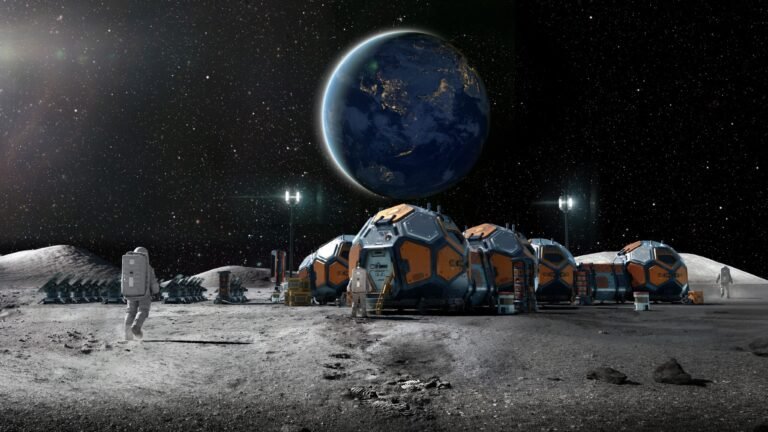
Cairo, Egypt – In scientific and engineering circles, calls have recently intensified for the development of a unified “Lunar Building Code.” This proposal aims to define the necessary standards and requirements for establishing safe human bases on the lunar surface, amidst the accelerating plans of space agencies and private companies to explore the Moon and prepare for a permanent human presence beyond Earth.
Experts argue that the lunar environment poses unprecedented engineering challenges. Chief among these are the lack of an atmosphere, extreme temperature fluctuations between day and night, constant exposure to cosmic and solar radiation, and the nature of unstable lunar soil that could affect the stability of structures.
Space Engineering and Sustainability Challenges
Specialists emphasize that the concept of a “Lunar Code” is not just about building design; it extends to highly precise technical aspects. This includes selecting advanced construction materials capable of withstanding harsh conditions, developing sophisticated insulation and radiation shielding systems, and employing stabilization techniques to prevent structural collapse. The code also sets rigorous standards for astronaut safety during construction and operational phases to ensure they remain in a protected environment.
A New Era for Lunar Exploration
As major international entities compete to launch crewed missions and build preliminary bases on the Moon over the coming decades, this proposal emerges as a fundamental step toward what is now known as “Space Engineering.” This shift represents a comprehensive redefinition of the concept of construction off-planet, following entirely new scientific and engineering standards that ensure the sustainability of human presence and mitigate the risks associated with space colonization.