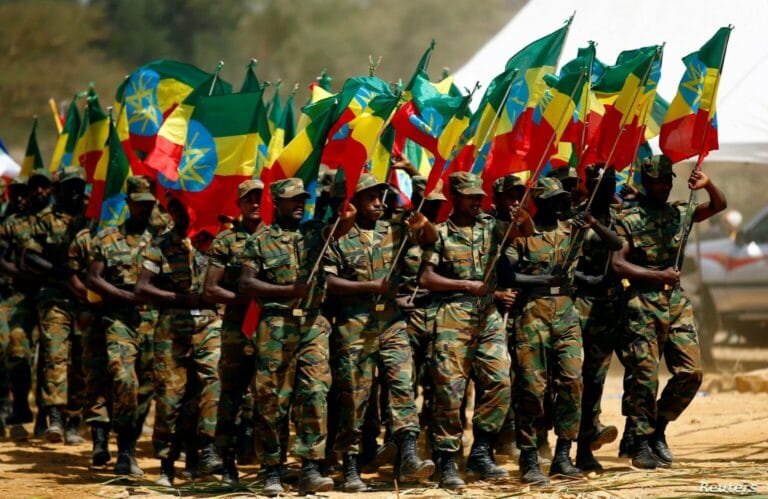
Addis Ababa, Ethiopia – Tigrayan authorities have accused the Ethiopian federal government of launching a new military offensive in western Tigray, claiming that fighting began early Saturday morning, August 1, in the Shirerina area. In a statement, the regional administration, led by the Tigray People’s Liberation Front (TPLF), alleged that the federal government had “launched an open war” in the western region, accusing it of escalating a protracted conflict. The statement read: “By intensifying the total blockade imposed by the dictatorial and genocidal prosperity regime on the people of Tigray, as well as the attacks carried out by drones and proxy armed forces, the regime has launched an open war.”
Accusations of violating the Pretoria Agreement and calls for general mobilization
The Tigrayan authorities claimed that these developments followed months of political and military tensions, stating that since the signing of the Pretoria Agreement to Cease Hostilities in 2022, the federal government had engaged in “various plots, blockades, and military preparations.” The statement emphasized the need for the region to remain steadfast, calling on residents, security forces, civil society organizations, and religious institutions to prepare for renewed conflict and join the struggle for “national survival.” The Tigrayan authorities also urged the international community to intervene immediately, warning of the consequences of this escalation. The Ethiopian federal government did not immediately respond to these allegations.
A wider deterioration in relations and international warnings of escalation
These claims come amid a broader deterioration in relations between Addis Ababa and the Tigrayan authorities. On July 7, Prime Minister Abiy Ahmed alleged that regional actors were conspiring against Ethiopia, while Tigrayan officials declared the Pretoria Agreement had “collapsed,” accusing Addis Ababa of failing to implement its key provisions. The TPLF also claimed that federal forces were mobilizing and redeploying personnel in preparation for a large-scale confrontation. In response, key international actors, such as the United States and the European Union, expressed deep concern, urging both sides to avoid escalation and adhere to the peace agreement. However, the reports from the ground could not be independently verified.