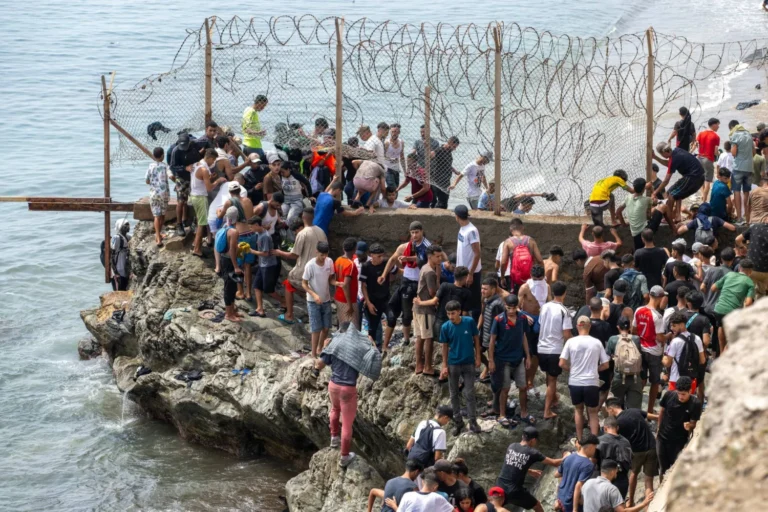
Madrid, Spain – Italy and France have tightened security measures at their borders with Spain, which this week saw an influx of some 60,000 migrants from Morocco into the Spanish enclave of Ceuta, sparking a serious diplomatic and political crisis within the European Union. On Friday evening, the Spanish Interior Minister announced that more than 48,000 migrants had returned to Morocco, where AFP reporters in Fnideq witnessed dozens of buses transporting hundreds of young passengers back to the Moroccan side.
The migrants arrived in Spain by land or sea, and 35 of them died, most of them drowning, according to local authorities in Ceuta. Since Thursday, Italy has been calling for the suspension of Spain’s membership in the Schengen Area, with the support of Finland and Denmark. However, Spain considers this proposal to be demagogic. Legal experts have confirmed that it is impossible to take such measures under the current legal framework.
French-Italian moves and European divisions
The Italian Interior Ministry announced the implementation of checks starting Saturday at its air and sea borders with Spain for non-European citizens arriving from there. In France, the number of police and gendarmes deployed at the border with Spain was increased fivefold to 334 as of Saturday, following a request from President Emmanuel Macron to strengthen border controls. Meanwhile, Spanish Prime Minister Pedro Sánchez called for unity, declaring via the “X” platform: “This is not a time for division, but a time to continue building a strong and united European Union.” As scenes of human influxes spread, the European far right amplified its demands for stricter security measures at the Schengen Area’s borders.
Causes of the crisis and the suffering of migrants
The president of the local government in Ceuta, Juan Vivas, announced that “around 60,000 people have entered the city,” representing 70% of its 84,000 inhabitants. Ceuta and Melilla are the only two land border crossings between Africa and Europe. On Friday night, police and military patrols were deployed in Ceuta’s streets and on its beaches to disperse groups of young men sleeping on the sand, waiting to cross. Several migrants, like 25-year-old Issam, explained that they took this step because of the “miserable situation and lack of prospects” in Morocco, where some had swum three kilometers to reach Europe before circumstances forced them to return.
Accusations against mafias and international reactions
The Spanish Prime Minister visited Ceuta, denouncing what he called an “attack and violation of Spain’s unity and territorial integrity,” and accusing “mafias” of being behind rumors of the border opening. The Spanish Interior Ministry deployed security reinforcements, including dozens of officers, Civil Guards, divers, and drones. This crisis, the largest since 2021, follows Sánchez’s visit to Algeria on July 20th, aimed at improving relations after years of tension. In Washington, US President Donald Trump likened the images from Ceuta to an “invasion of the country,” accusing Spain of deliberately facilitating illegal immigration.