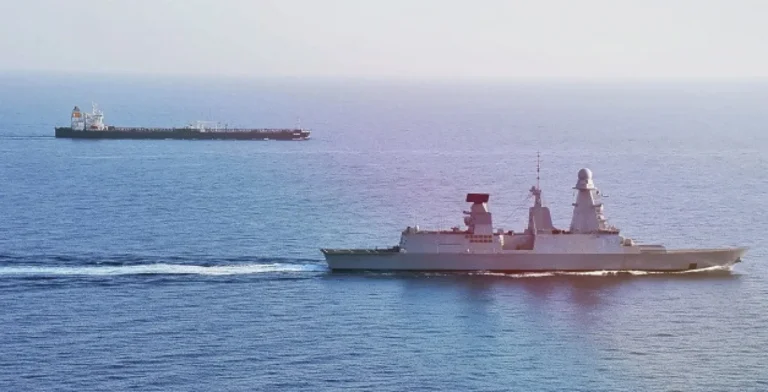
Brussels, Belgium – The EU’s maritime mission, ASPDIS, announced on Saturday that a merchant vessel safely transited the Red Sea under the escort of the Italian frigate Bergamini. In its official statement, the EU’s maritime security mission in the Red Sea did not specify the vessel’s identity, flag, ownership, or precise cargo details.
Media reports highlighted this announcement, noting that the maritime security force known as EUNAVFOR Aspides continues its operational missions, launched in February 2024, with the primary objective of protecting freedom of navigation amidst the ongoing Red Sea crisis. According to its mandate, the mission escorts commercial vessels, ensures comprehensive maritime situational awareness, and protects them from multi-faceted attacks in vital areas encompassing the Red Sea, the Gulf of Aden, the Arabian Sea, the Gulf of Oman, and extending to the Arabian Gulf.
Renewed disruptions to maritime navigation and the Houthi blockade of Saudi ships
This safe passage comes amid renewed and significant disruptions to maritime traffic in recent weeks, following the announcement by the Houthi group in Yemen, allied with Iran, of a naval blockade against Saudi Arabia, which was followed by attacks on Saudi ships. This escalation has heightened the risks to global shipping and contributed significantly to the rise in oil prices on international markets.
The Houthis, who control the capital Sana’a and most of Yemen’s Red Sea coast, announced on July 20th a naval blockade of Saudi ships, while simultaneously asserting that they did not intend to impose transit fees on other international vessels. The group clarified that this blockade would be lifted as soon as Saudi Arabia ended its blockade of Yemen, maintaining that this confrontation was directly linked to the future of Yemen and not directly to the regional conflict with Iran.
Serious security repercussions for Saudi oil exports
These developments on the ground are extremely dangerous for Riyadh, especially given the continued severe disruption to shipping through the Strait of Hormuz. Before the recent confrontations with Iran, approximately 80% of Saudi crude oil exports passed smoothly through the Strait of Hormuz.
However, the Red Sea has acquired increased strategic importance recently, after the Kingdom was forced to transport more than half of its oil production overland to the port of Yanbu on the Red Sea coast for export to global markets.
Therefore, closing or restricting the Red Sea to Saudi exports poses a direct and restrictive threat to the Kingdom’s ability to export its oil freely, making the protection provided by European naval vessels such as the Italian frigate a vital element in trying to secure sensitive regional shipping lanes and ensure the continued flow of global supplies.