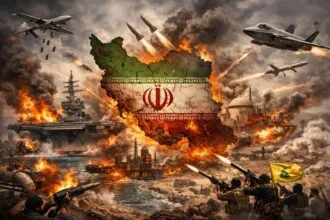
Tel Aviv, Israel – Sources familiar with the matter revealed that Sara Netanyahu, wife of Israeli Prime Minister Benjamin Netanyahu, is lobbying security officials to extend her security detail for an additional five years. This request comes at a time of heightened security alert in Israel, stemming from the ongoing conflict with Iran.
Security services are keeping
According to Israel’s Channel 12, the National Security Council has shown significant resistance to this demand, refusing for weeks to issue a formal opinion approving it. Security officials justify this stance by arguing that imposing specific security measures for a five-year period, under the current complex circumstances, is “disproportionate and not based on an accurate assessment of the evolving threat level.”
For its part, the Shin Bet (Israel Security Agency) is adopting a similar stance, having yet to submit its final opinion to the relevant committee. It is estimated that the agency may recommend continuing to provide protection based on actual changes in the security threat level, rather than being tied to a predetermined timeframe. While the Shin Bet declined to comment on this news, the National Security Council confirmed that it does not typically comment on confidential deliberations. It also clarified that the final decision will be made by the relevant committee in the coming weeks, after the necessary security assessments have been completed.
The Prime Minister’s office responded
In response, the Israeli Prime Minister’s Office issued a statement denying the report, describing the information it contained as “incorrect.” It should be noted that security arrangements for the Netanyahu family are subject to rigorous periodic review by security and intelligence agencies. Decisions are made based on joint recommendations between the Shin Bet and the National Security Council, taking into account developments on the ground.
Context of public debate
This news comes amid a recurring debate in recent years about the cost of security protection for the prime minister’s family.
This debate has intensified recently with the increasing frequency of direct and indirect threats against senior officials and their families. Its importance has also grown with the volatile regional situation and the potential conflict with Iran, which has placed the security of political figures in Israel under constant security scrutiny. This raises questions about balancing security needs with the public sensitivity surrounding these issues.