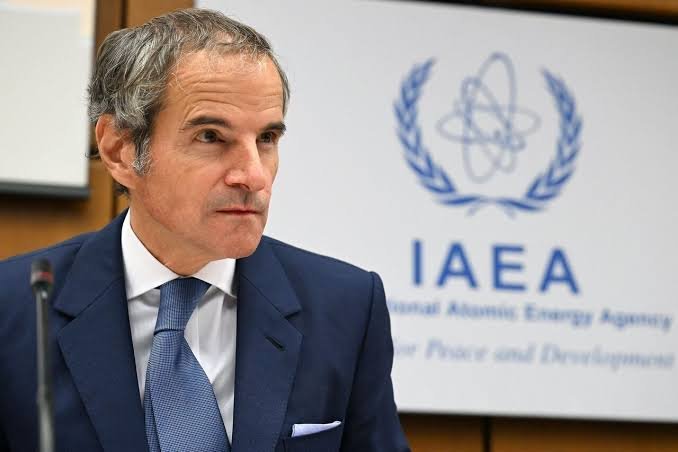
Vienna, Austria – The Director General of the International Atomic Energy Agency (IAEA), Rafael Grossi, confirmed that the agency is not an official party to the ongoing negotiations between the United States and Iran. He also stressed that its role is specifically limited to providing necessary technical support to the parties involved in the issue.
Behind-the-scenes work and a pivotal role for intermediaries
In a press statement responding to inquiries about the agency’s involvement in the talks, Grossi explained, “In a sense, we are working behind the scenes. While it’s no secret, we are not an official party to the talks; the United States and Iran are, of course, the participants.” He noted that regional countries are playing pivotal roles in bridging the gaps. He added, “We are talking about Pakistan and Qatar; they are mediators, while we are there to provide assistance on technical matters only.”
Understandings to end the military conflict and the naval blockade
These statements come amid rapidly evolving political developments, including the signing of a memorandum of understanding between Tehran and Washington on the night of June 18. The memorandum aimed to end the military standoff that erupted between the two countries on February 28.
The memorandum includes a roadmap for resolving the complexities of the crisis. It also sets a clear timeframe for the United States to lift its naval blockade, for Iran to resume its normal activities, and for ensuring the safety of navigation in the strategic Strait of Hormuz.
The repercussions of the 2025 strikes and the restrictions on the work of inspectors
It is worth noting that relations between Tehran and the UN agency have been noticeably strained recently. Following the US strikes on Iranian nuclear facilities in June 2015, Iran curtailed its cooperation with the International Atomic Energy Agency (IAEA). Furthermore, it significantly restricted IAEA inspectors’ access to sensitive sites. Iranian authorities at the time asserted that all decisions regarding the IAEA’s dealings were the exclusive prerogative of Iran’s Supreme National Security Council.
International parties are currently seeking, through ongoing negotiations, to restore stability to the Gulf region and remove the nuclear issue from the sphere of direct military conflict. At the same time, the International Atomic Energy Agency continues to provide its technical expertise to ensure that the parties adhere to any technical understandings that may result from the stalled diplomatic dialogue.