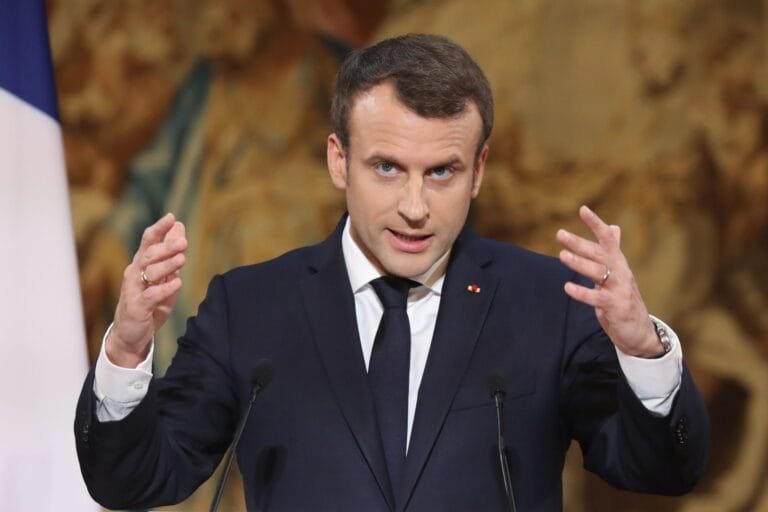
Paris, France – In a strong indication of the de-escalation on the ground following the recent diplomatic agreement, French President Emmanuel Macron announced on Friday the return of the aircraft carrier Charles de Gaulle, an icon of the French Navy, to its home port of Toulon. This comes after the completion of its mission in the Middle East, a region that has witnessed heightened military tensions in recent months.
“Positive development” in the diplomatic track
The announcement came via a post by President Macron on the platform “X” (formerly Twitter), where he explained that the decision to redeploy the aircraft carrier was made in light of the “positive development” in the region. This development is the memorandum of understanding signed between Tehran and Washington on June 17th to end the war. This memorandum also laid the groundwork for negotiations aimed at reaching a final and comprehensive agreement within 60 days.
Despite the return of the most important naval vessel in the French fleet, Macron emphasized that France maintains its security presence to ensure regional stability. He explained that “our mine-clearing and support assets remain deployed and ready to intervene when necessary, in coordination with our international partners.” This reflects a balanced French strategy that combines de-escalation with maintaining the capacity to respond to any security emergency.
Charles de Gaulle’s journey through a sea of crises
The French Ministry of the Armed Forces announced on May 6 that the aircraft carrier had transited the Suez Canal en route to the Gulf of Aden. It carried a strike force of approximately twenty Rafale fighter jets, supported by escort frigates. Upon its arrival in the Gulf region in mid-May, the Charles de Gaulle was placed on high alert for a “neutral” mission. This mission aimed to ensure freedom of international navigation in the Strait of Hormuz. This was confirmed at the time by the Minister of State for the Armed Forces, Alice Ruffaut.
This extensive French deployment came in response to the complex security situation that has prevailed in the region following the outbreak of war on February 28. The war erupted after the US-Israeli attack on Iranian targets. It is worth noting that this conflict has placed international shipping and energy routes in the Gulf under existential threats, necessitating international intervention to stabilize the situation.
Expectations for the next stage
Paris’s move comes at a pivotal time, as the international community awaits the outcome of direct talks between the United States and Iran aimed at solidifying a ceasefire. Observers believe that France’s withdrawal of its most prominent military assets sends a message of mutual trust between the parties to the conflict. Furthermore, this action confirms that the diplomatic track is beginning to bear fruit in curbing the military conflict.
While France remains committed to cooperating with regional partners, all eyes are on the outcome of the negotiations that began on June 17. Many hope these efforts will translate the “positive development” mentioned by President Macron into lasting stability that restores calm to the strategic waters of the Gulf.