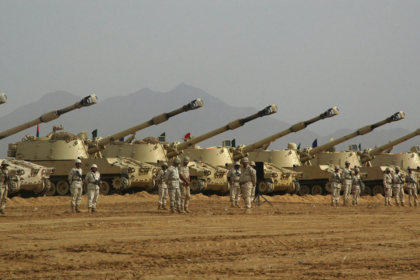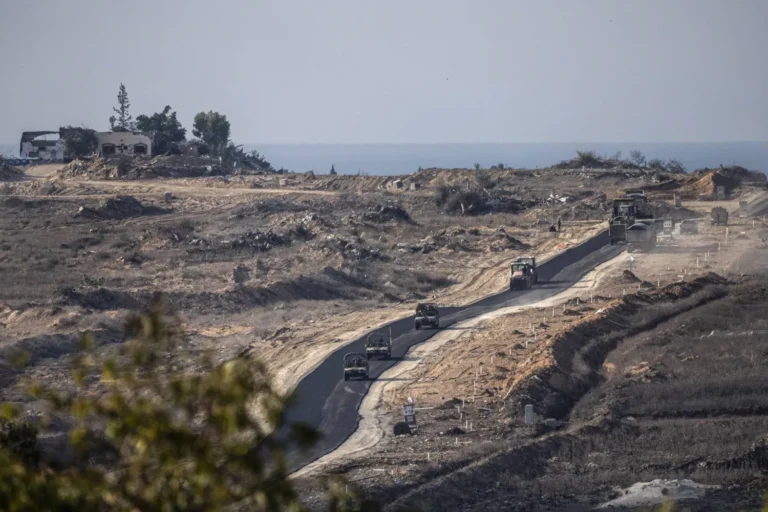
Gaza, Palestine – In a move indicating intensified US efforts to impose a new reality in the Gaza Strip, the Israeli newspaper “Israel Hayom” revealed Wednesday evening that the US military has begun construction of a massive military base near the Gaza border, specifically in the vicinity of the settlement of Re’im. According to the newspaper, this base will serve as the headquarters for international organizations and military forces slated to arrive in the area to implement the “Trump Plan.” This will replace the current headquarters located in the city of Kiryat Gat.
Base objectives and field equipment
The American construction plan includes equipping the base with a state-of-the-art command and control tower for field forces. The US has also begun issuing tenders for the supply of mobile structures and temporary buildings in preparation for the construction of permanent buildings on the site. Israeli security sources confirmed full and high-level coordination between Washington and Tel Aviv regarding this project, with the Israeli Ministry of Defense and the IDF providing the necessary logistical and field support for its construction.
The Israeli security establishment estimates that the base could be ready within months. However, it clarified that current activity will remain limited to coordination and future preparations. This comes amidst the stalemate surrounding the Hamas issue and the second phase of the peace plan. Israel refuses to comply with its demands, while Hamas continues to adhere to its own.
International Stabilization Force and the Risks of War
In a related context, the Trump administration, through the “Peace Council,” is seeking to advance the infrastructure for the next phases. These phases include major civilian projects such as debris removal and reconstruction. This is an extremely daunting task given that 90 percent of Gaza’s infrastructure has been destroyed. The United Nations estimates the cost of reconstruction at approximately $70 billion.
However, the participation of the International Stabilization Force (ISF) still faces significant challenges. Only five countries (Indonesia, Morocco, Kazakhstan, Kosovo, and Albania) have agreed to send troops. Other countries have suspended their participation due to the repercussions of the ongoing US-Israeli war against Iran since last February.