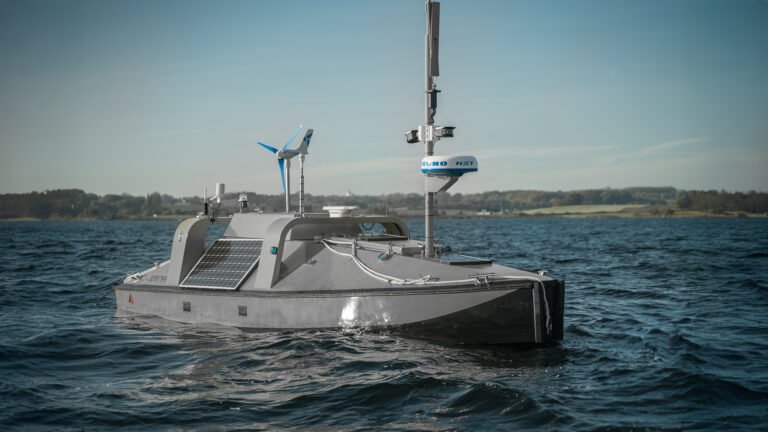
Washington, USA – Science fiction movies are no longer far from modern reality. Consequently, technology has become a fundamental part of our lives. Recently, an autonomous boat successfully rescued a US helicopter crew. Accordingly, this event highlighted unmanned naval vessels. Furthermore, this technology proved to be a vital and effective tool. In addition, it has become a crucial element in modern military strategies. This development is clearly evident in the Middle East.
On the other hand, “Task Force 59” pioneers this military field. This unit is headquartered mainly in Bahrain. Since its inception, it has deployed fleets of advanced boats. Thus, it turned regional waters into a live laboratory. As a result, the US military covers vast areas. This is done with lower operational costs and zero human risks.
The Diverse Missions of Unmanned Naval Vessels
Unmanned naval vessels vary to meet military operation demands. On one hand, we find coastal boats dedicated to port protection. On the other hand, there are long-range, autonomous vehicles. These vehicles can sail thousands of miles independently. In addition, they execute strategic reconnaissance missions efficiently. Naval forces also rely on precise autonomous submarines. These submarines are used for mine detection and identifying hostile targets.
Actual Engagement in Combat Zones
The role is no longer limited to surveillance and data collection. Rather, missions have expanded to include execution and rapid intervention. For instance, these vehicles secured lives under complex conditions. Moreover, the military record witnesses increasing combat successes. In late 2024, the Ukrainian “Magura V5” boat stood out. Accordingly, this boat made new military history. It actually succeeded in downing a flying Russian helicopter. This incident is considered the first of its kind globally.
The Future of Unmanned Naval Vessels
Experts believe this rapid trend has strategic reasons. Firstly, the economic factor is a major and convincing driver. Accordingly, their construction cost is much lower than regular ships. Secondly, this technology reduces direct human risk. It executes dangerous missions without exposing sailors to death. Finally, these systems ensure long-term operational endurance. They are capable of staying at sea without complex supplies.
In conclusion, we are facing an entirely new era in warfare. Despite existing technical challenges, investments are increasing strongly. Therefore, unmanned naval vessels will be the standard foundation. They will form the backbone of any modern fleet in the future.