
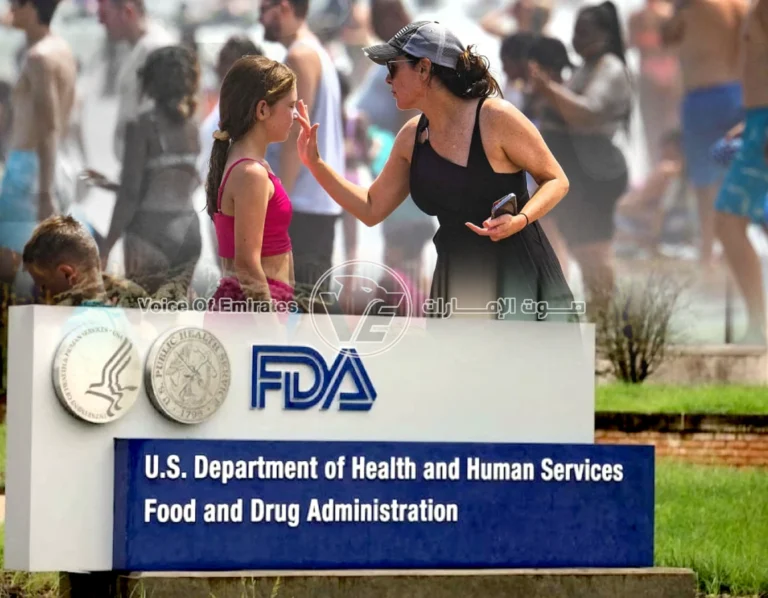
Washington, DC – The US Food and Drug Administration (FDA) has opened the door to a new generation of sunscreen products by approving bimethrinol
as the first new ingredient added to sunscreens in the United States in nearly two decades.
Moreover, this move is expected to enhance the effectiveness of products available to consumers. It should also improve their user experience.
A globally used component reaches the US market
Bimotrizenol is a broad-spectrum sunscreen that effectively blocks harmful ultraviolet (UV) radiation.
It has been used for many years in Europe and several other global markets.
Despite its international popularity, its use was not permitted in
the United States due to strict regulations governing sunscreen ingredients.
These ingredients are legally classified as drugs, not cosmetics.
Technical and health advantages
Experts indicate that the new ingredient possesses properties that make
it more stable under sunlight compared to some currently used conventional sunscreens.
Its large molecular structure also reduces the likelihood of its absorption through the skin into the bloodstream.
Furthermore, this point has sparked scientific debate regarding some other ingredients used in sunscreens.
Specialists believe that the adoption of bimethrinol could help manufacturers develop more comfortable sunscreens.
They believe this is achieved by reducing the number of chemical filters used.
In addition, it lowers their overall concentrations without compromising the level of protection.
This is expected to result in lighter, less greasy sunscreens that are more palatable to consumers.
As a result, this should encourage their regular use.
Welcome from health experts and advocates
Scientific and health authorities welcomed the decision,
considering it a significant development in modernizing sun protection options in the United States.
Experts emphasized that Americans have relied for years on older technologies compared to products available in other global markets.
Additionally, they noted that the adoption of the new ingredient could pave the way for the review and adoption of further innovations in this field.
This step comes amidst growing global concern about preventing the harmful effects of ultraviolet radiation.
These harmful effects are linked to an increased risk of skin cancer and premature aging.
Specialists hope that the availability of more effective and user-friendly products
will contribute to higher rates of sun protection adoption among consumers in the coming years.