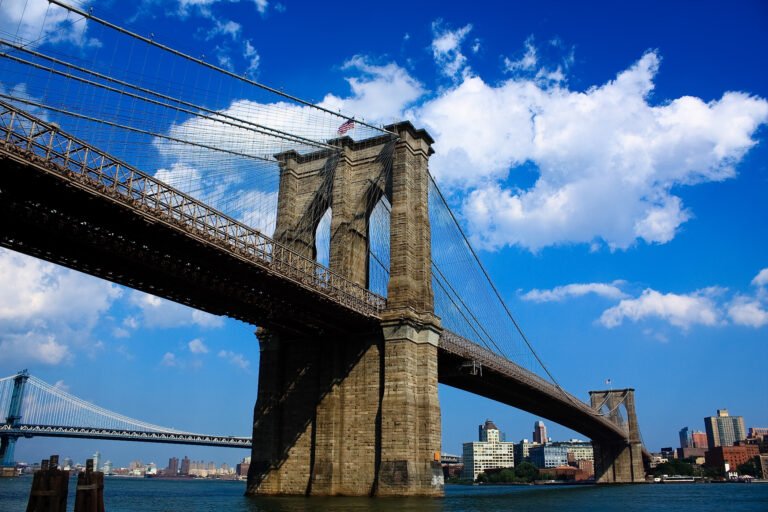
New York, USA – The Brooklyn Bridge stands in the New York skyline as a towering icon that defies time. It was never just a “crossing” between the banks of the East River. Instead, it was once the “most daring engineering adventure” of the 19th century. In an era when ferries were the only way to connect New York and Brooklyn—which were separate entities at the time—John Roebling’s dream of connecting the two cities with a suspension bridge spanning the industrial horizon of that era was born. From this perspective, the bridge was not merely a technical achievement. It was also a symbol of American resilience during a major stage of industrial transformation.
The Roebling Family: Engineering Mixed with Sacrifice
Furthermore, the story of the bridge’s construction is a quintessential family epic. It began with the German-born engineer John Augustus Roebling, who was not destined to see his dream rise above the waters. He perished in a tragic accident early in the project. The torch then passed to his son, Washington Roebling, who faced his own grueling medical and engineering challenges while building the massive foundations beneath the river. Moreover, the name “Emily Roebling” stands out as the silent hero of this saga. She transformed from a wife into an “on-site engineer,” managing the site and communicating with workers for years. The bridge thus became a testament to the genius of an entire family. They believed in a vision until it became reality.
Challenges That Didn’t Stop Achievement
In the same context, the project faced working conditions that historians described as terrifying. From “caisson disease” affecting workers due to high pressure beneath the water, to structural difficulties requiring techniques unfamiliar at the time, these challenges were immense. Nevertheless, construction was completed in 1883. This revolutionized transport and contributed directly to the “urban boom” New York would later witness. The bridge transformed from a mere iron structure into a “lifeline” that connected communities. It also turned the two separate cities into a unified global economic hub, leaving behind an architectural fingerprint that continues to inspire engineers today.
More Than a Bridge: A Global Icon
Ultimately, the Brooklyn Bridge remains more than just an engineering feat. It is a witness to a historical phase when New York was seeking its identity as a major global city. As millions of visitors flock annually to walk across its vintage wooden planks, they are not just crossing a river. Rather, they are walking over “human ambition” that overcame the impossible. Based on this, the bridge remains a living model of man’s ability to shape history through steel. It maintains its status as one of the most precious cultural and architectural treasures that never ages, no matter how the features of modern New York change.