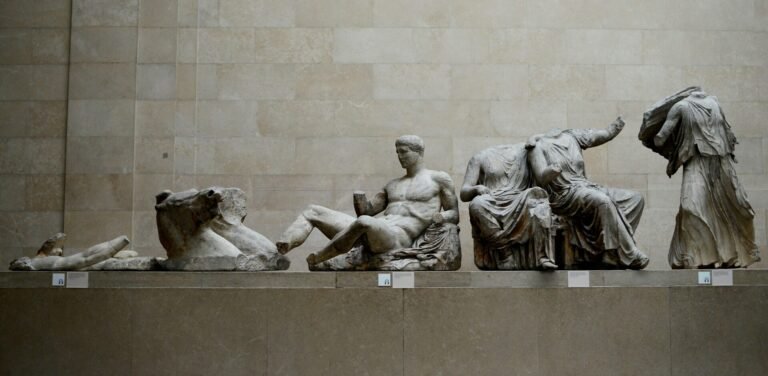
Paris, France – In a new diplomatic and cultural move, UNESCO has issued a clear call for the United Kingdom and Greece to intensify negotiation rounds regarding the “Parthenon Marbles.” This step comes as international pressure mounts to resolve one of the most contentious cultural disputes in modern history. On one hand, Athens continues its decades-long struggle to reclaim these pieces. It asserts that they are an “integral part of its national identity.” Meanwhile, London relies on legal and technical arguments regarding “universality.” It also emphasizes the preservation of pieces within global museum collections.
More Than Just Artifacts: A Symbol of Hellenic Identity
Furthermore, the Parthenon Marbles—dating back to the 5th century BC—represent the jewel of the Parthenon temple in Athens and a symbol of the artistic greatness of ancient Greek civilization. From this perspective, experts argue that this dispute transcends “legal ownership.” They say it concerns the essence of human heritage and where historical treasures should be displayed. While Greece treasures the marbles as a living witness to its ancestors’ greatness, British museums defend their role as “global guardians.” They preserve these treasures and make them accessible to millions of visitors from around the world.
Future Repercussions: Will the “Parthenon” Open the Door to Global Restitution?
In the same context, the world is watching these negotiations closely. Observers believe that any real breakthrough in this file will not only affect the Greek pieces. It could also set “legal and moral precedents” that encourage other nations to demand the return of their historical artifacts from Western museums. Based on this, UNESCO’s pressure is an attempt to bridge the gap by finding “cooperation formulas” or “long-term loans.” This is instead of sticking to the difficult binary choice: staying abroad or returning permanently.
Toward a Diplomatic Settlement of a Historical Dispute
Ultimately, the challenge before London and Athens is to find a language of dialogue that goes beyond “museum walls” toward a broader space of cultural understanding. As international calls for the restitution of historical pieces to their countries of origin grow, the Parthenon case remains a test of the international system’s ability to balance the aspirations of peoples to preserve their heritage. Moreover, it must consider the diversity of experience in global museums. The upcoming talks—under the auspices of UNESCO—may not lead to an immediate resolution. Yet they will certainly be decisive in defining the concept of “cultural justice” in the 21st century.