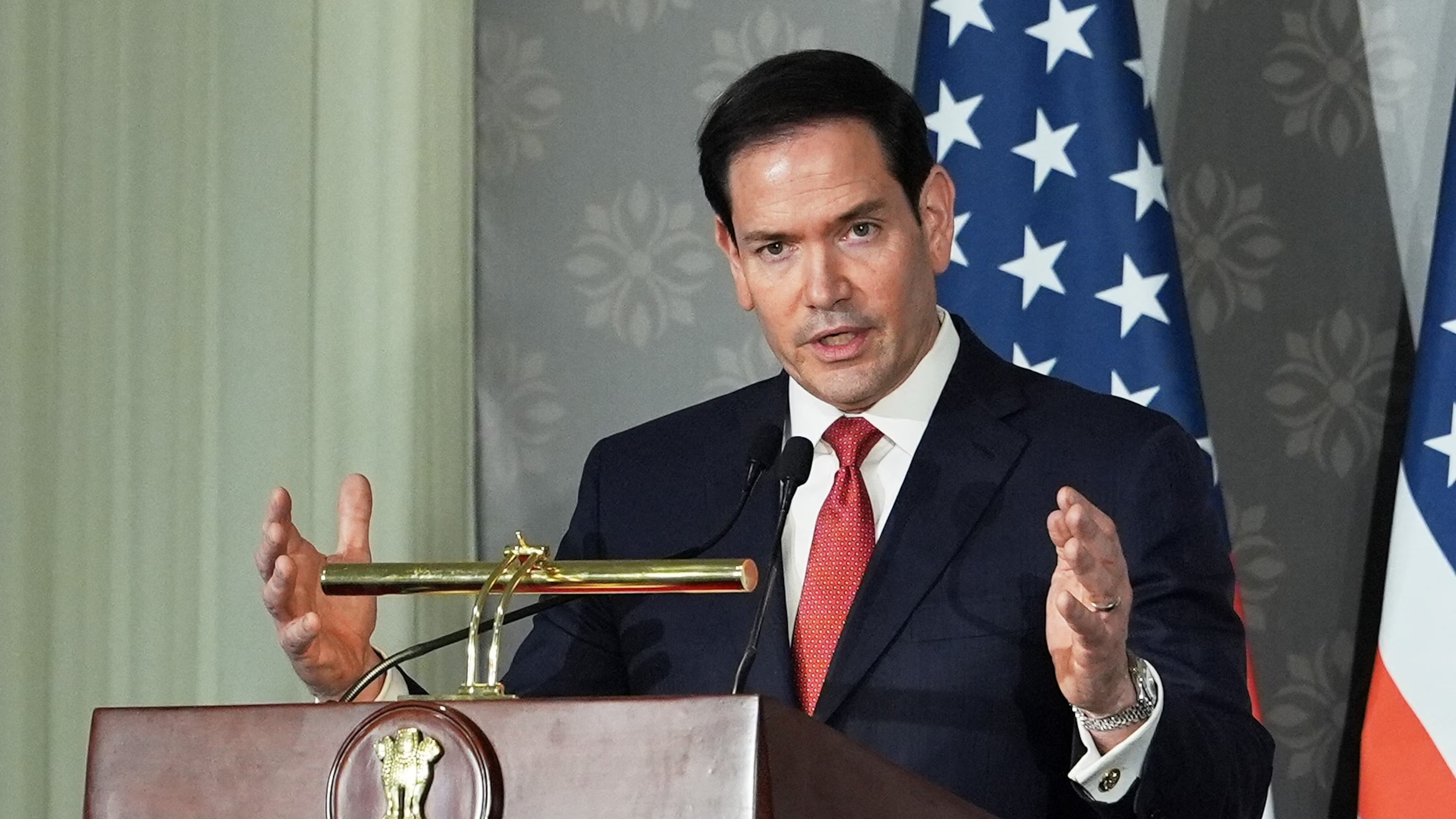
Washington, USA – Amid the accelerating diplomatic momentum surrounding the US-Iran negotiations, US Secretary of State Marco Rubio has revealed a “regional consensus” supporting his administration’s approach to dealing with Tehran. Rubio confirmed that “seven or eight nations in the region” back the negotiation path Washington is pursuing. He emphasized that the US remains committed to this path to achieve understandings that restore stability, away from the language of military escalation. Notably, the Iran negotiations continue to attract global attention. From this perspective, this regional support acts as a “strategic cover” that strengthens Washington’s position at the negotiating table. It affirms that diplomatic solutions remain the preferred choice for America’s partners to end the current state of tension.
Regional Coordination: The Quest for a “World Without Nuclear Fear”
On the other hand, the US Secretary of State indicated that countries in the region are well aware that dialogue represents the most rational option to address outstanding issues. Foremost among them are the nuclear program and maritime security in the Strait of Hormuz. In the Iran negotiations, such issues remain central. Moreover, Rubio explained that Washington continues to coordinate closely with regional and international partners. This effort ensures that any understanding reached will not be a mere temporary fix. Instead, Washington wants it to be the beginning of a “long-term process” that eventually leads to a world no longer anxious about Iranian nuclear threats. Based on this, the White House seeks to transform this “Memorandum of Understanding” from a security deal into a comprehensive regional stability framework.
Negotiations: Cautious Progress and Precise Balance
In the same context, these statements come as indirect talks between Washington and Tehran witness “slight progress.” However, complex technical issues—such as uranium enrichment and sanctions relief—still pose obstacles to a final, comprehensive deal. From this perspective, Rubio firmly stated that reaching a deal is not a matter of “72 hours.” He emphasized the necessity for precision in addressing technical files. Furthermore, Iran negotiations require great patience and strategic planning. Simultaneously, President Donald Trump’s message—stressing against being “in a rush”—reflects a strategy aimed at strengthening the American negotiator’s position. This approach maintains economic pressure through the strict blockade until the final signature is secured.
Regional Anticipation: Is a “Major Breakthrough” Imminent?
Ultimately, the international community awaits the coming hours, which might bring the “good news” Rubio hinted at in his latest remarks. Based on this, the success of these negotiations would represent a victory for American diplomacy and his administration’s ability to garner regional support. This achievement will undoubtedly reshape the political and security map of the Middle East. As talks continue amidst cautious optimism, the greatest challenge remains the parties’ ability to bridge fundamental gaps and arrive at a formula that ends the current tension. Indeed, Iran negotiations could play a vital role in shaping regional stability. This formula would open a new chapter of security coexistence in the region, far from the shadow of war that has long loomed over the Strait of Hormuz.