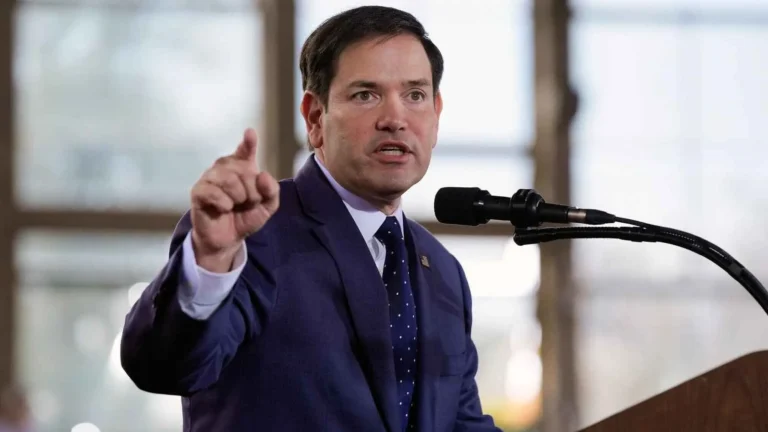
Washington, USA – In a position reflecting a decisive shift in US policy toward the Lebanese file, US Secretary of State Marco Rubio launched a scathing attack on Hezbollah Secretary-General Naim Qassem. Rubio described his recent statements as a “transparent attempt” to incite chaos and dismantle political stability. In strong language, Rubio confirmed that the United States “will not allow Hezbollah’s efforts to overthrow the democratically elected government to succeed.” He emphasized Washington’s steadfast commitment to stand with Lebanese state institutions in their endeavor. According to Rubio, Lebanon must restore full sovereignty over its territory and national decision-making.
Rubio: Hezbollah Holds Lebanon “Hostage”
In his direct critique, Rubio accused Hezbollah of “dragging Lebanon into chaos and holding it hostage to serve external agendas.” The US Secretary added with confidence that the era in which the group imposed its absolute hegemony over Lebanese decision-making is “nearing its end.” Rubio also strongly condemned what he called “reckless calls” to overthrow the government. Moreover, he considered these discourses a direct threat to legitimate state institutions and an attempt to disrupt the diplomatic path. This path aims at restoring the country’s stability away from militia influence.
US Support for Strengthening Lebanese State Sovereignty
On the other hand, the US administration reiterated its continued support for the Lebanese government and its security and military institutions. This comes as part of a broader strategy to enhance political security in the region. These American positions come at a highly sensitive time. In fact, they coincide with rapidly accelerating regional developments, particularly the ongoing negotiations between the United States and Iran. Observers believe that through this political escalation, Washington aims to preempt any attempts by Hezbollah. The group could use the Lebanese arena as a pressure card in nuclear or regional negotiations. Furthermore, observers also emphasize that the Lebanese state’s restoration of its authority is the only guarantee for domestic peace.
Regional Scene: International Pressure to Curtail Militia Influence
Ultimately, the US statements reflect mounting international pressure on Hezbollah, especially after Naim Qassem’s call to halt negotiations with Israel and his demand that any understanding between Tehran and Washington should include the situation in Lebanon. These moves confirm that the international community, led by Washington, has become more determined to ensure that weapons and decision-making power remain solely in the hands of the Lebanese state. As observers await the repercussions of this escalation, the most prominent question remains: will this pressure succeed in forcing Hezbollah to retreat, or is Lebanon heading toward a new phase of intense political conflict? For now, Lebanese developments remain at the heart of the Middle East’s political balances. There is anticipation of what the coming days will bring.