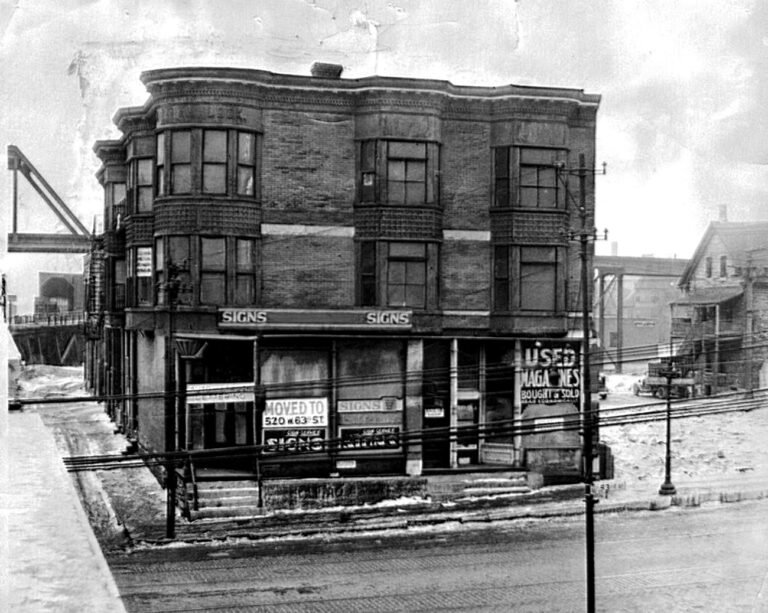
Chicago – Herman Webster Mudgett, notoriously known as “H.H. Holmes,” remains one of the most terrifying figures in modern American history. Transitioning from a fraudulent doctor and businessman to the first documented “Serial Killer” in the United States during the late 19th century, Holmes utilized his deceptive skills to build an empire of crime behind a mask of social respectability.
The “Murder Castle”: Architecture of Death
Holmes became infamous for constructing a massive building in Chicago later dubbed the “Murder Castle.” He designed the structure with intricate complexity, featuring secret rooms, trapdoors, windowless corridors, and chutes designed to transport bodies to the basement. This “labyrinth” was used to lure victims and execute crimes away from public scrutiny, marking it as one of the most shocking cases of the Victorian era.
Exploiting the “World’s Fair” for Criminal Schemes
Historical investigations indicate that Holmes primarily targeted women and strangers who traveled to Chicago seeking employment during the 1893 World’s Columbian Exposition. Exploiting the city’s overcrowding and rapid migration, he carried out his schemes without raising suspicion for years. Following a series of mysterious disappearances, authorities uncovered the horrifying details within his building, leading to his arrest and a trial that captivated global public attention.
The End of the “Killer Doctor” and His Criminological Legacy
In 1896, Holmes was executed by hanging after confessing to dozens of murders, though the true number of his victims remains a subject of debate among historians to this day. His case has since become a foundational reference in “Criminology” and “Criminal Psychology” for understanding psychopathic motives, ensuring that the name H.H. Holmes remains a symbol of the dark dawn of serial crime in America.