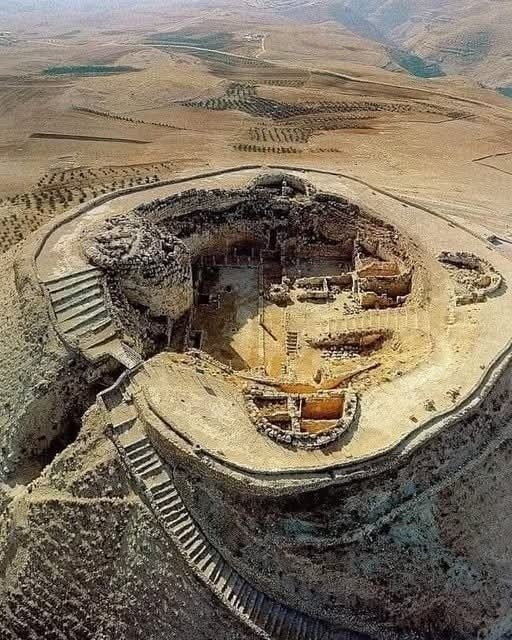
Jerusalem – Herod’s Palace stands as one of the most prominent archaeological landmarks associated with the region’s Roman history. Built during the reign of King Herod the Great, it served as a royal residence combining architectural grandeur with a strategic location. Over the centuries, this edifice has become a living witness to the succession of various empires, making it a vital site documenting the major historical shifts in the region.
Architectural Design Reflecting Roman Luxury
Situated on a strategic height overlooking vast desert areas and surrounding plains, the palace offered significant defensive and military advantages. Beyond its military role, it functioned as an administrative and political hub during the Roman period. The site features a complex design, including massive walls, towers, grand reception halls, and Roman-style baths, reflecting the high level of luxury and urban advancement characteristic of Herod’s era.
Accumulated Layers of History and Transformation
Throughout successive eras, the palace underwent demolition and repurposing by later civilizations. Some of its sections were converted into religious sites or military barracks, resulting in accumulated archaeological layers that reflect the political and religious changes over the centuries. Archaeologists consider the remaining walls, inscriptions, and foundations material evidence of multiple construction phases following the Roman era, rendering the site an open laboratory for studying ancient architecture.
Archaeological Value and Global Research Interest
Herod’s Palace continues to draw significant interest from researchers and historians due to its rare value as a single site that witnessed major civilizational transitions. Today, the palace provides a comprehensive view of how historical landmarks were reshaped over time to suit the needs of new ruling powers while maintaining the Roman-era imprint as the foundational base for this majestic structure.