- From the Nile to the Horn of Africa
- A century of “Nile security”
- 2015.. Trying to build new rules
- Egypt and Somalia: From politics to security
- The question that traditional maps don’t ask
- “Water security” is no longer just about the quantity of water.
- The paradox: Egypt and Ethiopia are inside Somalia
- Three circles move simultaneously
- Possible Scenarios
Cairo, Egypt – A century separates the first agreements regulating the Nile waters from the Egyptian military presence in Somalia. But between these two points, the region’s geopolitics has shifted: from a struggle over water shares to competition for coastlines, ports, and maritime routes, extending to the Red Sea and the Bab el-Mandeb Strait. Has Egyptian water security now begun outside the Nile? This is not a hypothesis suggesting that Cairo sent its forces to Somalia because of the Grand Ethiopian Renaissance Dam; there is no official evidence to support this. Rather, it is an attempt to understand the convergence of two strategic trajectories: Egypt’s insistence on its water rights and interests in the Nile, and its simultaneous expansion of its political and security presence in the Horn of Africa, a region where Egypt’s interests intersect with the security of the Red Sea and the Suez Canal.
From the Nile to the Horn of Africa
In December 2024, Cairo announced that it would participate with troops in the new African Union mission in Somalia, at the request of the Somali government and welcomed by the African Peace and Security Council. By February 2026, Egyptian participation entered the implementation phase, with Cairo announcing the sending of forces and air assets to Somalia within the African Union Mission to Support and Stabilize Somalia (AUSSOM). Thus, Egyptian-Somali cooperation is no longer limited to political or military support, but rather Egypt has a declared security presence within a country located in the heart of the Horn of Africa and close to the Gulf of Aden and Bab al-Mandab. But the importance of the step does not come from Somalia alone. It comes from Somalia’s location on the map of Egyptian interests.
A century of “Nile security”
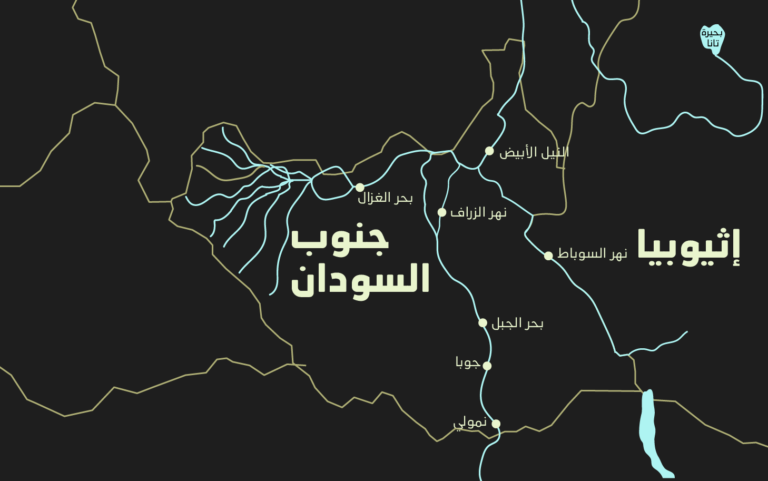
To understand the current shift, we must return to the roots. In 1902, the border agreement between Ethiopia and Sudan included an Ethiopian pledge not to undertake any works on the Blue Nile, Lake Tana, or the Sobat River that would impede the flow of water, except under the conditions stipulated in the agreement. Then came the 1929 arrangements, which became one of the most important historical foundations upon which Cairo bases its defense of its water interests.
In 1959, Egypt and Sudan signed an agreement for the full utilization of the Nile waters, setting the water allocations for the two countries at 55.5 billion cubic meters for Egypt and 18.5 billion for Sudan.
But the fundamental problem remained: Ethiopia was not a party to the 1959 agreement. This led to a confrontation between two visions:
Cairo and Khartoum: historical rights and uses based on existing agreements. On the other hand: the upstream countries: the need to reformulate the system for distributing and using the river’s waters according to the principle of equitable and reasonable utilization.
2015.. Trying to build new rules
The 2015 Declaration of Principles on the Grand Ethiopian Renaissance Dam (GERD) was an attempt to establish a trilateral framework between Egypt, Ethiopia, and Sudan to manage the issue. The declaration included principles such as cooperation, equitable and reasonable utilization, not causing significant harm, and cooperation in filling and operating the dam.
However, a final agreement on the rules for filling and operating the dam was never reached. In September 2015, after Ethiopia officially inaugurated the GERD, Cairo returned to the UN Security Council, asserting that the unilateral operation of the dam could not be a substitute for a legally binding agreement on the rules for filling and operating it.
In contrast, Ethiopia maintains that the dam is a development and electricity generation project and is not intended to harm Egypt or Sudan. Thus, the dispute shifted from water agreements to a larger question: who has the right to determine the rules for using the river when it crosses the borders of several countries? While the Grand Ethiopian Renaissance Dam (GERD) issue remained unresolved, the map of the region changed, and the Horn of Africa itself began to transform.
Ethiopia, a landlocked country since Eritrea’s independence in 1993, has placed access to the sea back at the forefront of its strategic agenda. In January 2024, Addis Ababa signed a memorandum of understanding with Somaliland regarding access to the coast, sparking a crisis with Mogadishu, which considered the agreement an infringement on its sovereignty and territorial integrity. The Red Sea and the Horn of Africa have thus become part of a new equation:
Ethiopia wants access to the sea.
Somalia insists on its sovereignty over its territory and coastline.
Egypt supports Somali unity.
The Suez Canal depends on the stability of the maritime route south of the Red Sea.
Here, the map begins to expand.
Egypt and Somalia: From politics to security
In August 2024, Egypt and Somalia signed a military cooperation agreement. Days later, Cairo began sending military aid to Mogadishu, a move Reuters said came amid growing rapprochement between the two countries and tensions with Ethiopia. In October of the same year, the presidents of Egypt, Somalia, and Eritrea met in Asmara and agreed to strengthen cooperation to support the Somali army in combating terrorism and protecting land and sea borders.
Here, for the first time, a clear strategic triad emerged:
Egypt: Water security + Red Sea + Suez Canal.
Somalia: Sovereignty + Counterterrorism + Coastal Protection.
Eritrea: Red Sea + Security of the region’s western coast.
Conversely, Ethiopia stands at the center of several of these issues: the Nile, the Mediterranean Sea, Somalia, and Eritrea.
But is the goal to “contain Ethiopia”?
Yes, some analyses have linked the Egyptian-Somali rapprochement to competition with Ethiopia, and some have even suggested the possibility of the region becoming an arena for indirect confrontation.
However, Cairo presents its presence in Somalia as support for the Somali state, counterterrorism efforts, and participation in a multilateral African mission. Furthermore, the presence of Egyptian forces within AUSSOM places them within an African institutional framework, rather than on a unilateral Egyptian mission declared against Ethiopia. Most significantly, Ethiopia itself is involved in security arrangements within Somalia.
The question that traditional maps don’t ask
Typically, when discussing Egyptian water security, we draw a diagram:
Ethiopia → Grand Ethiopian Renaissance Dam → Sudan → Egypt.
However, the new map needs to include:
Ethiopia – Horn of Africa – Somalia – Gulf of Aden – Bab el-Mandeb – Red Sea – Suez Canal.
This shifts the question:
Does Egyptian water security now begin outside the Nile River?
“Water security” is no longer just about the quantity of water.
For Egypt, the issue of water is not a simple economic matter. The Egyptian Ministry of Foreign Affairs describes water security as a national security priority and emphasizes the importance of protecting Egyptian water rights and interests. However, in the new regional environment, protecting interests does not necessarily mean deploying forces to protect water resources.
There are other layers: international law, diplomacy, African partnerships, regional security, Red Sea security, and protecting shipping lanes connected to the Suez Canal. In this sense, it can be said that Cairo is expanding its risk management framework to encompass its interests.
The paradox: Egypt and Ethiopia are inside Somalia
What makes the situation most intriguing is that Cairo and Addis Ababa are not merely rivals in regional affairs. Ethiopian and Egyptian forces are now present within security arrangements linked to Somalia. This creates an unusual situation: the two countries, rivals over the Nile waters, are operating within a single security theater in the Horn of Africa. But their presence there does not necessarily imply a direct confrontation.
Somalia could become an arena for competition, a space for avoiding confrontation, or a new space for mediation. This is where the significance of the issue lies. The Red Sea also enters the equation.
Another development makes this connection even more crucial. The Horn of Africa is no longer solely an African issue. It is linked to the security of the Red Sea, the Bab el-Mandeb Strait, and global trade. Furthermore, escalating tensions around the Red Sea have transformed the security of maritime routes into an international concern. Reuters reports that the Red Sea’s strategic importance has increased amid regional tensions and competition for influence in the region. For Egypt, the equation is clear: an unstable Bab el-Mandeb can affect the Red Sea, the Red Sea affects the Suez Canal, and the Suez Canal is a vital component of Egypt’s economic security. Here, Egyptian national security becomes far broader than the Grand Ethiopian Renaissance Dam (GERD) issue.
Three circles move simultaneously
Current Egyptian policy in the Horn of Africa can be summarized in three circles:
Circle One | The Nile: Defending water interests and rights and reaching binding agreements regarding the Grand Ethiopian Renaissance Dam.
Circle Two | The Horn of Africa: Strengthening relations with Somalia, Eritrea, and other countries in the region, and supporting stability in Somalia.
Circle Three | The Red Sea: Protecting interests related to navigation and the Suez Canal, and preventing the Red Sea from becoming an area of influence that threatens regional stability.
These three circles are not identical, but they do intersect.
What has changed in a century?
The transformation can be summarized in five scenes: 1902: A border agreement that included a clause concerning the flow of the Nile. 1929: Water arrangements that enshrined a portion of Egypt’s historical interests. 1959: An Egyptian-Sudanese agreement defining the two countries’ water uses. 2015: The Declaration of Principles on the Grand Ethiopian Renaissance Dam (GERD) attempts to establish a new framework between Egypt, Sudan, and Ethiopia. 2024–2026: Egypt expands its security partnership with Somalia and contributes troops to the African Union Mission. The distance between the first and last scenes is more than a century. But the question remains: How can Egypt protect its interests in a region where its sphere of influence is shifting faster than the river’s course?
Possible Scenarios
- Containment through diplomacy
Egypt continues to combine political pressure with negotiation, while avoiding turning its rivalry with Ethiopia into a direct military confrontation. - Expanding the network of partnerships
Cooperation with Somalia, Eritrea and other countries is transforming into a broader security and political network in the Red Sea and the Horn of Africa. - The rise of regional competition
If the Grand Ethiopian Renaissance Dam crisis coincides with a new crisis over Ethiopian access to the sea or competition over ports, the issues may become more interconnected. - The most positive scenario: The Horn of Africa will transform from an arena of competition into a space for regional arrangements involving Egypt, Ethiopia, Somalia, and the Red Sea countries, so that water and maritime security becomes part of a system of cooperation, not conflict.