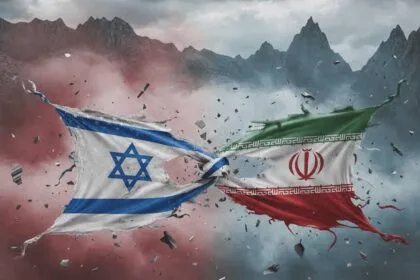
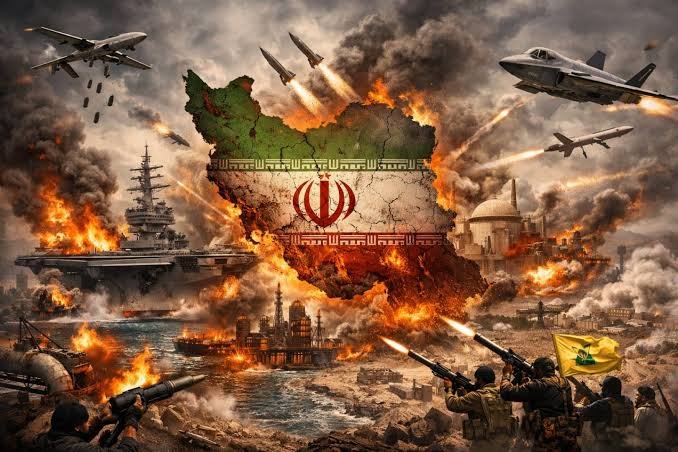
Washington, DC – A report published by Politico reveals that many of the United States’ international allies are extremely hesitant to become directly involved in any large-scale military confrontation with Iran. Citing European and Asian diplomats, these parties have stipulated a permanent ceasefire between Washington and Tehran, along with guarantees of freedom of navigation in the Strait of Hormuz, as prerequisites for any future military or civilian cooperation. This reluctance stems from their desire to avoid being drawn into the conflict or attempting to impose specific conditions on the US administration.
International bargaining: From Baltic shields to Ukrainian drone deals
The report indicates that the initial hesitation has transformed into reciprocal political and military demands and bargaining. A coalition led by France and Britain has linked the deployment of forces to secure the Strait of Hormuz to a formal ceasefire. Similarly, an official from an Eastern European country stated his country’s desire to bolster the direct US military presence in the Baltic region in exchange for any potential participation in the ongoing operations in the Strait of Hormuz. Kyiv has offered to supply the United States and the Gulf states with advanced drone interception systems, contingent upon receiving further supplies of advanced Western weaponry.
Expected naval buildup and regional movements in the Red Sea
Politico noted that the French-British coalition, in coordination with some 40 other countries, has already established a multinational maritime mission tasked with securing navigation once the fighting ceases. Naval vessels from these countries are stationed in the Arabian Sea awaiting the signal to halt operations. Regionally, Saudi Arabia simultaneously announced the formation of a maritime alliance comprising 14 predominantly Muslim countries, aimed at protecting and securing vital shipping lanes in the Red Sea, the Gulf of Aden, and the Bab el-Mandeb Strait.