London, Britain – Before the advent of modern seawater desalination technologies, sailors faced the extremely difficult challenge of securing drinking water during long sea voyages,
which led them to devise various means of conserving supplies and avoiding thirst while sailing for weeks or even months.
Springs and rivers are a source of fresh water
Ships were equipped with large wooden barrels filled with fresh water collected from springs and rivers.
However, this water often became contaminated or acquired an unpleasant taste and odor over time due to prolonged storage in the barrels.
To overcome this problem, sailors would stop at ports and islands along the voyage to refill their tanks with fresh water.
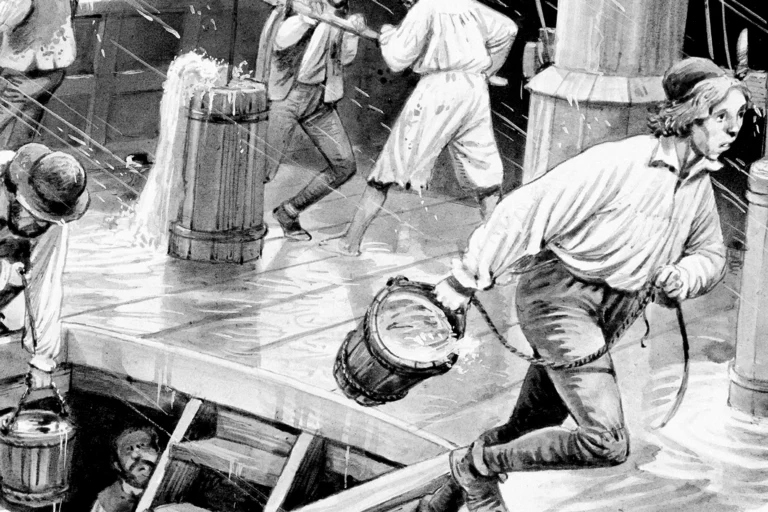
They also took advantage of rainfall, collecting it with sails or cloth and storing it for later use.
Water consumption regulation
On some long voyages, sailors resorted to rationing water consumption, where a daily quota was set for each individual that could not be exceeded, while low-alcohol drinks such as beer or wine diluted with water were used in some European fleets, because they were more able to remain potable compared to water, which spoils quickly.
Primitive methods for distilling seawater
Some civilizations also knew rudimentary methods of seawater distillation, relying on heating the water and then condensing the steam to obtain fresh water.
However, these methods were limited in efficiency and unsuitable for producing sufficient quantities for the crews of large ships.
With the advancement of technology in the 20th century, seawater desalination plants revolutionized maritime navigation.
Modern ships became capable of producing their own fresh water while at sea,
thus solving one of the most difficult problems that sailors had faced throughout history.