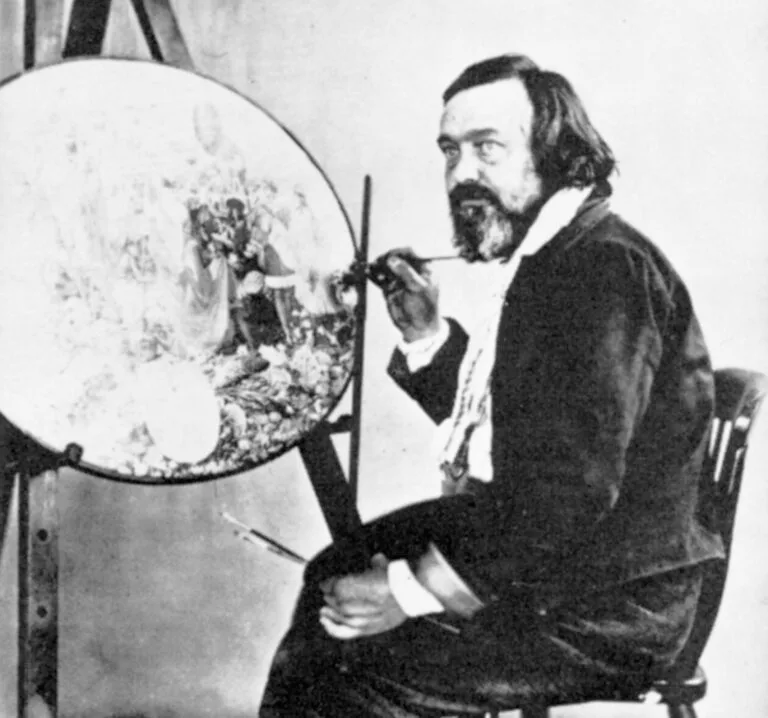
London, Britain – British painter Richard Dadd is one of the most controversial artists in art history, after his life turned from a promising career into a tragic story that ended with him spending 42 years in a mental health facility, leaving behind artworks that later became some of the most famous masterpieces of Victorian art.
The birth and fame of Dad
Dad was born in 1817, and his artistic talent emerged early. He joined the Royal Academy of Arts in London and gained wide fame thanks to the accuracy of his drawings and his broad imagination, before participating in a trip to the Middle East and Egypt with a British nobleman, a trip that historians believe formed a turning point in his psychological state.
He killed his father and fled to France
Upon his return to Britain, he began to experience severe mental disturbances, believing he was receiving orders from supernatural forces.
In 1843, he murdered his father, mistaking him for a disguised enemy, before fleeing to France, where he was arrested and returned to Britain.
Dade was committed to the renowned Bethlem Asylum, and later transferred to Broadmoor Asylum, where he spent the remainder of his life under medical care.
Despite this, he never ceased to paint, producing some of his most important works within the asylum, showcasing exceptional skill in detail, color, and imagination.
Intricate details and a complex mythical world
One of his most famous paintings is “The Stroke of the Magician’s Axe,” which took him nearly nine years to complete and is now considered one of the most important paintings in the history of British art,
distinguished by its meticulous details and complex mythical world that reflects his psychological state and unique imagination.
Richard Dadd died in 1886 after more than four decades spent in mental asylums,
but his artwork remains a testament to an exceptional talent that triumphed over the harshness of his illness,
granting him a prominent place among the most important artists who left an unforgettable mark on the history of world art.