Washington, DC – US Central Command (CENTCOM) announced early Thursday morning the conclusion of a new wave of targeted military strikes against critical infrastructure inside Iran, under the direct orders of President Donald Trump. CENTCOM stated that the operations, which ended at 9:00 PM Eastern Time, targeted sensitive military infrastructure, including command centers, air defense systems, and storage and launch sites for cruise missiles and drones.
Map of American Targets
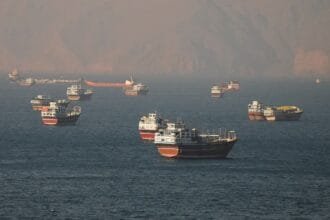
The strikes focused on strategic locations aimed at undermining Tehran’s ability to threaten international shipping in the Strait of Hormuz, and included:
Bandar Abbas: Targeting the main port and naval facilities belonging to the Revolutionary Guard.
Greater Tunb Island: A wave of strikes lasting 90 minutes targeted coastal defense systems and cruise missiles.
Semnan International Airport: Parts of the US airstrikes were hit, according to the Semnan Province Crisis Management Department.
In response, the Iranian Revolutionary Guard announced that it had intercepted some of these attacks, confirming the interception and destruction of a US MQ-9 drone in the city of Andimeshk in Khuzestan province. Tehran and Semnan province also witnessed the activation of air defense systems after the detection of hostile reconnaissance aircraft. Additionally, explosions were heard in the strategic Parchin area as a result of air defenses engaging potential targets.
Legal controversy surrounding “energy targets”
These military operations come at a time of escalating international warnings and legal concerns, with US President Donald Trump threatening to target Iran’s energy sector and bridges in the coming days. These threats have placed the US administration under intense scrutiny from international law. Legal experts have also pointed out that targeting vital infrastructure essential to civilians could constitute a war crime under the 1949 Geneva Conventions.
It is worth noting that Trump faced widespread international criticism last April after threatening to destroy “Iranian civilization” before a ceasefire agreement was reached. With the continuation of the tit-for-tat military operations, the confrontation appears to have entered a more complex phase. The range of targets is expanding to include infrastructure facilities, amid warnings of the potential humanitarian and legal consequences of this type of operation, which extends beyond traditional military sites. This is all unfolding in a struggle for “survival,” as Iran describes it, and as the United States wages it in successive waves.