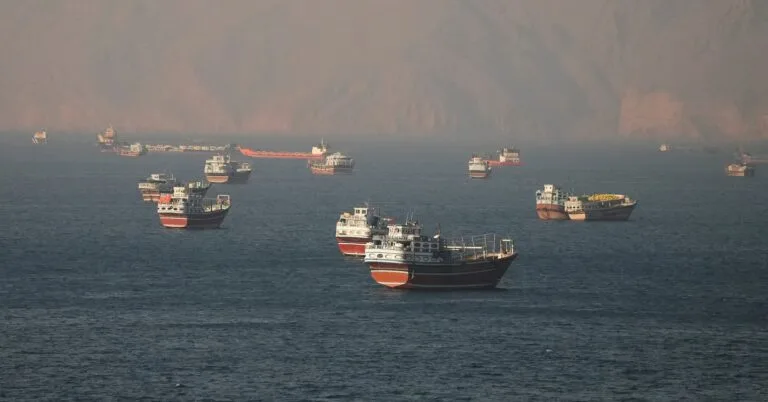
Tehran, Iran – The Strait of Hormuz, the world’s most vital and important waterway for energy transport, has seen a sharp decline in shipping traffic. This comes in the wake of the recent military escalation between the Islamic Republic and the United States in the Persian Gulf region.
Movement reduced by half
Shipping data from Kpler, a vessel tracking company, showed a significant drop in the number of ships transiting the Strait of Hormuz on Wednesday, with only seven vessels passing through, compared to 13 the previous day. This decline coincided with the first day of a new US naval blockade of Iranian ports. This action has exacerbated tensions already high since Iran announced the closure of the strait late last Saturday. Reports indicate that this disruption to international shipping threatens global energy flows, especially since this waterway saw the passage of nearly one-fifth of the world’s total daily oil and gas exports before the crisis erupted.
The nature of ship traffic under the blockade
According to Kepler’s analysis, shipping activity on Wednesday was minimal and extremely cautious. Only four vessels entered the Arabian Gulf, including three small tankers and a grain carrier. Meanwhile, three other ships departed through the Strait of Hormuz carrying various cargoes of liquefied petroleum gas, coal, and fuel oil.
The absence of giant tankers
In a sign of heightened security risks, data showed a complete absence of the supertankers that form the backbone of the region’s energy exports. No VLCCs (Very Large Crude Carriers) or LNG carriers transited the strait on Wednesday. This decline comes as some tankers have resorted to precautionary measures to avoid detection. Reuters reported that a Suezmax tanker carrying one million barrels of Saudi crude passed through on Tuesday, its Automatic Identification System (AIS) switched off. This reflects the depth of the security crisis imposed by the ongoing military operations in the region. These operations continue to push international shipping toward greater uncertainty and complexity.