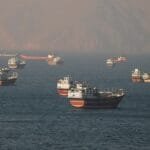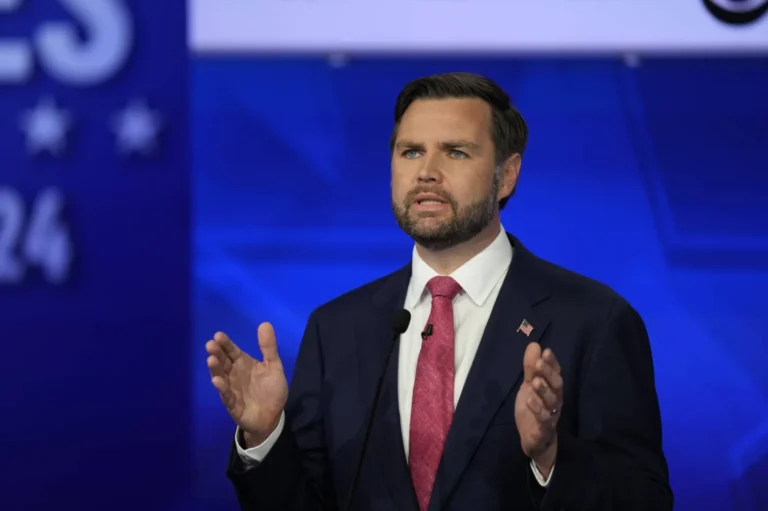
Washington, DC – US Vice President J.D. Vance revealed on Thursday that ensuring the Strait of Hormuz remains open and guaranteeing the free flow of global energy supplies is a top strategic priority for the US administration. In an interview with Joe Rogan, Vance acknowledged the difficulty of securing navigation using conventional military means alone. He explained that this is due to the challenges posed by low-cost drones and their ability to target ships.
Diplomacy backed by power
Vance emphasized that his administration’s mission is to reach a settlement that achieves two essential goals: preventing Iran from acquiring a nuclear weapon and ensuring the uninterrupted flow of oil and gas. He also explained that the president has successfully clarified the United States’ willingness to use military force if necessary. However, he stressed that this force is not an end in itself. He added that it is one of many tools that can be employed to resolve the crisis.
The Vice President emphasized that the era of large-scale military interventions and regime change was over. He also indicated that the US military would not assume the role of determining the fate of nations. In contrast, Vance criticized those who oppose a diplomatic approach with Tehran, describing their proposals as unrealistic. He explained that they amounted to nothing more than “endless and futile bombing.”
Escalation of the military confrontation
Vance’s remarks come at a time of escalating tensions in the region. Following Washington’s reimposition of a naval blockade on Iranian ports, US forces launched two waves of targeted attacks on Wednesday. US Central Command (CENTCOM) stated that the strikes targeted coastal defense systems and cruise missile storage and launch sites on Greater Tunb Island. Additionally, the strikes targeted Bandar Abbas, a port city that houses vital naval facilities belonging to the Islamic Revolutionary Guard Corps.
In response, Iran targeted US military sites in neighboring countries, describing its actions as a “war of survival.” It also threatened to escalate further in its subsequent actions. While Washington affirms its determination to curb Iranian capabilities that threaten freedom of navigation, the diplomatic path Vance alluded to remains fraught with complications. This comes amidst an exchange of direct strikes that has transformed the Strait of Hormuz into an arena of open-ended confrontation. Meanwhile, the world awaits the repercussions of this crisis on energy markets and the global economy.