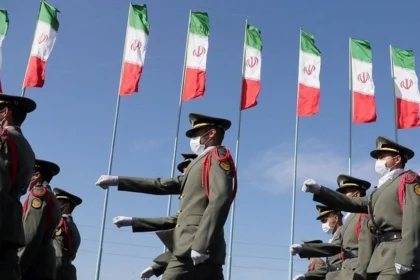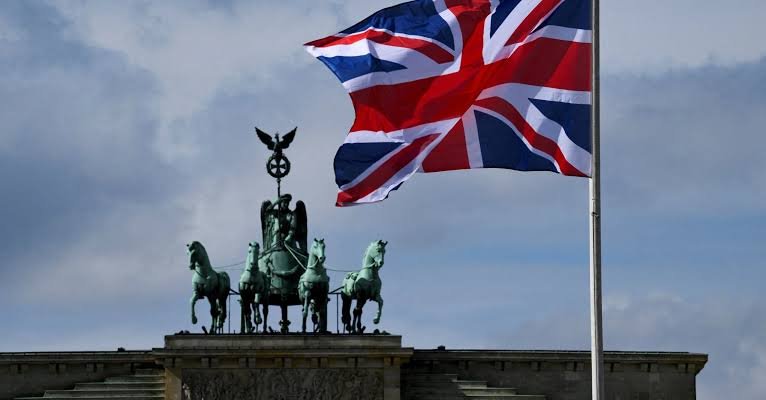
London, Britain – In an escalating diplomatic move reflecting strained relations between London and Tehran, the British Foreign Office summoned Ali Nasimfar, the Iranian chargé d’affaires in London, on Tuesday. This was to formally protest the role of the Quds Force of the Iranian Revolutionary Guard Corps in directing armed groups to carry out attacks on European soil.
Hostile activities in the heart of Europe
The British Foreign Office explained in its statement that the summons was issued due to the involvement of the Quds Force in directing a group known as the “Islamic Movement of Right-Wings” to carry out a series of attacks targeting Jewish community centers and Israeli institutions. These attacks also targeted Persian-language media outlets operating from outside Iran. According to British investigations, these attacks occurred between March and May of this year.
The British Foreign Office described these activities as “completely unacceptable.” It noted that Tehran had ignored repeated warnings from London and had even escalated what it called the “malign behavior” of its intelligence services. Despite Iranian officials’ consistent denials of using proxy forces, evidence presented by British security and domestic agencies confirms the Quds Force’s direct responsibility for the planning and execution.
تصنيف الحرس الثوري “منظمة إرهابية”
This diplomatic move follows a decisive government decision taken by London on Monday to officially designate Iran’s Islamic Revolutionary Guard Corps (IRGC) as a terrorist organization, deeming it a direct threat to British national security. Furthermore, this designation marks a significant shift in British foreign policy towards Tehran, paving the way for stricter sanctions and restrictions on the activities of IRGC sympathizers within the UK.
This move further isolates the Iranian regime internationally and puts pressure on European allies to take similar steps to counter Iranian activities that extend beyond its borders and threaten the stability of European capitals. These developments come at a time of significant escalation in direct and indirect confrontations in the region and the world. This further complicates the already complex diplomatic and security landscape between London and Tehran, leaving the future of bilateral relations uncertain amid mounting evidence of Tehran’s involvement in destabilizing activities abroad.