- The most significant disagreement, however, emerged over the U.S.-Iran confrontation.
- The White House reportedly reacted with frustration.
- The military disagreement was followed by a series of diplomatic developments that further fueled perceptions of deteriorating relations.
- Negotiations with Tehran
- One of the most consequential developments concerns Washington’s military posture in Saudi Arabia.
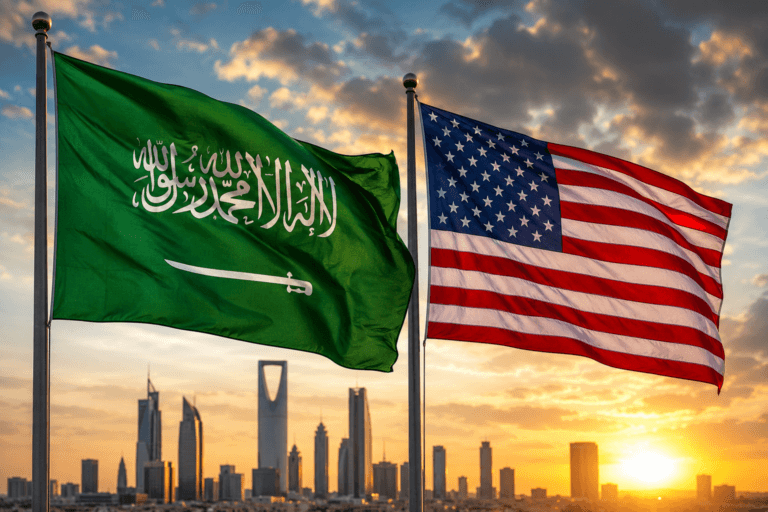
Damascus, Syria – The strategic partnership between Saudi Arabia and the United States, long regarded as one of the foundations of Middle Eastern security and global energy stability, is facing its most serious strain in years, according to multiple reports citing American, Arab, and regional intelligence officials.
While Riyadh remains one of Washington’s closest partners in the region, recent disagreements over the conflict with Iran, regional security strategy, and the future direction of Middle East diplomacy have reportedly eroded trust between the two allies.
According to The Wall Street Journal and The Times of Israel, relations deteriorated significantly after Saudi Arabia resisted U.S. efforts to expand military operations against Iran, reflecting Crown Prince Mohammed bin Salman’s broader strategy of prioritizing regional stability over military escalation.
Saudi Arabia’s position has been shaped largely by its long-term economic transformation agenda under Vision 2030. Riyadh has consistently argued that another major regional conflict would threaten global energy markets, discourage foreign investment, damage Gulf infrastructure, and undermine years of economic reform designed to diversify the Kingdom’s economy.
The Kingdom has also maintained a firm position on another major U.S. priority—normalization with Israel. Although the Trump administration has reportedly encouraged Saudi Arabia to join the Abraham Accords, Riyadh has repeatedly stated that it will not establish formal diplomatic relations with Israel without meaningful progress toward a two-state solution that guarantees the establishment of an independent Palestinian state.
The most significant disagreement, however, emerged over the U.S.-Iran confrontation.
According to officials cited by The Wall Street Journal, Saudi Arabia warned Washington against expanding military operations, arguing that a broader conflict could destabilize the Middle East, disrupt shipping through the Strait of Hormuz, trigger severe volatility in global oil markets, and expose Gulf energy infrastructure to Iranian retaliation.
Those concerns reportedly came to a head during a U.S. military initiative known as “Project Liberty,” an operation designed to secure commercial shipping through the Strait of Hormuz amid escalating attacks on maritime traffic.
The operation required access to Saudi airspace and military facilities, but according to American and Arab officials familiar with the discussions, Riyadh initially refused to authorize the use of its territory. The decision reportedly forced Washington to suspend the operation shortly after it began.
Although President Donald Trump later publicly attributed the suspension to diplomatic progress with Tehran, officials cited by The Wall Street Journal said Saudi opposition played a decisive role in halting the mission during its initial phase.
The White House reportedly reacted with frustration.
According to U.S. and Arab officials, the Trump administration warned Saudi Arabia that deliveries of critical defensive systems—including interceptor missiles and drone-defense capabilities used to counter Iranian attacks—could be delayed unless Riyadh reversed its position.
Facing mounting security concerns, Saudi Arabia eventually agreed to restore military cooperation, allowing the operation to proceed discreetly. Nevertheless, U.S. officials reportedly concluded that the dispute caused lasting damage to mutual confidence.
The military disagreement was followed by a series of diplomatic developments that further fueled perceptions of deteriorating relations.
Secretary of State Marco Rubio’s recent Gulf tour included visits to the United Arab Emirates, Kuwait, and Bahrain but excluded Saudi Arabia. According to sources familiar with Saudi thinking, officials in Riyadh viewed the omission as a deliberate diplomatic slight, although American officials denied that interpretation and noted that Rubio held discussions with Saudi Foreign Minister Prince Faisal bin Farhan during a Gulf Cooperation Council meeting.
According to the reports, Crown Prince Mohammed bin Salman also declined an invitation to attend the G7 Summit attended by President Trump, reflecting Saudi dissatisfaction with Washington’s handling of the regional crisis. Saudi media, however, attributed the Crown Prince’s absence to prior domestic commitments.
Saudi officials have consistently argued that military escalation against Iran risks drawing the Gulf into a wider conflict. Their concerns were reinforced after Iranian missile and drone attacks targeted strategic infrastructure across the region following the expansion of hostilities.
According to the reports, Saudi Arabia eventually permitted limited operational cooperation with U.S. forces but subsequently found itself vulnerable to Iranian retaliation against facilities inside the Kingdom.
Negotiations with Tehran
Throughout the conflict, Riyadh reportedly continued advocating for a diplomatic solution. The Wall Street Journal reported that Saudi officials encouraged Washington to pursue negotiations with Tehran, expressed concern over continued military operations that could further destabilize the region, and warned that additional strikes risked provoking more attacks on Gulf energy infrastructure.
The reports also describe ongoing discussions aimed at establishing a temporary framework that would include a 60-day ceasefire, the reopening of the Strait of Hormuz, and negotiations toward a broader agreement addressing Iran’s nuclear program. President Trump reportedly told advisers that any timeline for such negotiations would remain flexible.
Israel was reportedly not involved in these negotiations. According to the reports, Israeli officials opposed the proposed framework, arguing that it would fall short of key strategic objectives, including dismantling Iran’s nuclear and missile capabilities.
One of the most consequential developments concerns Washington’s military posture in Saudi Arabia.
According to U.S. officials familiar with internal planning, the Pentagon is evaluating options to reduce America’s military presence in the Kingdom and potentially shift resources toward regional partners viewed as having provided stronger operational support during the conflict. Officials cautioned that the discussions remain preliminary and that no final decisions have been made.
Despite recent tensions, the strategic relationship between Riyadh and Washington remains substantial. Saudi Arabia continues to be one of the world’s largest purchasers of U.S. defense equipment, a major investor in American industries, and an increasingly important partner in artificial intelligence, critical minerals, civilian nuclear cooperation, and global energy security.
Nevertheless, the reported disagreements illustrate an evolving Saudi foreign policy that increasingly emphasizes diplomacy, economic development, and regional de-escalation over direct military confrontation.
Whether the current tensions represent a temporary disagreement or the beginning of a broader strategic recalibration remains uncertain. What appears increasingly evident, however, is that Riyadh’s regional priorities have evolved alongside its economic ambitions, with stability now viewed as an essential prerequisite for achieving Vision 2030 and securing the Kingdom’s long-term geopolitical and economic objectives.