- Taipei’s reaction
- Taiwan did not stand idly by in the face of this latest incursion. The Taiwanese Coast Guard announced the immediate deployment of patrol boats to monitor Chinese movements. Taipei also issued a firm statement asserting that it would use “all necessary measures to forcefully expel Chinese vessels that harass our waters,” clearly indicating its readiness to confront any attempt to impose a fait accompli on its maritime borders.
- International concerns and defense alliances
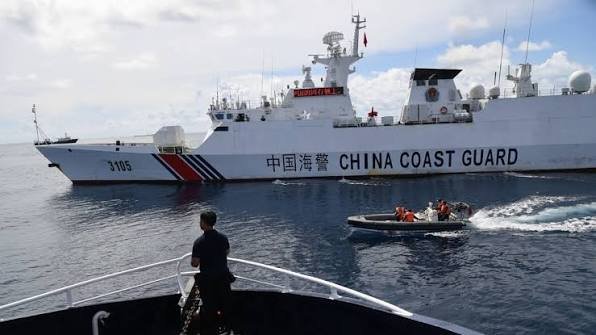
Beijing, China – In a move that threatens to escalate regional tensions, China announced on Saturday that it had deployed a coast guard patrol in waters east of Taiwan. Beijing described the deployment as a “law enforcement patrol,” reaffirming its intention to strengthen its presence in areas it considers to be under its “jurisdiction.” The move has sparked outrage in Taipei and growing concern in Western capitals.
Taipei’s reaction
Taiwan did not stand idly by in the face of this latest incursion. The Taiwanese Coast Guard announced the immediate deployment of patrol boats to monitor Chinese movements. Taipei also issued a firm statement asserting that it would use “all necessary measures to forcefully expel Chinese vessels that harass our waters,” clearly indicating its readiness to confront any attempt to impose a fait accompli on its maritime borders.
Taiwan did not stand idly by in the face of this latest incursion. The Taiwanese Coast Guard announced the immediate deployment of patrol boats to monitor Chinese movements. Taipei also issued a firm statement asserting that it would use “all necessary measures to forcefully expel Chinese vessels that harass our waters,” clearly indicating its readiness to confront any attempt to impose a fait accompli on its maritime borders.
This escalation comes within the broader context of the struggle for influence in the Pacific region. Since the beginning of June, China has launched a “special maritime operation” east of Taiwan. This is a response to the recent agreement between Japan and the Philippines on maritime boundary demarcation and enhanced defense cooperation.
Beijing views these moves, which include actions in exclusive economic zones claimed by China, as a threat to its national interests. According to the official Xinhua news agency, the Chinese operation aims to assert Beijing’s “maritime administrative jurisdiction.” It also involved coordination between maritime agencies from Fujian, Guangdong, and the East China Sea provinces.
International concerns and defense alliances
These tensions are not isolated from regional alliances, as the United States, France, Germany, and Britain have all entered the diplomatic fray. Chinese anger stems from statements made last month during a meeting between Japanese Prime Minister Sanae Takaichi and Philippine President Ferdinand Marcos Jr. Both sides affirmed their commitment to strengthening maritime security in the region.
Statements by Japanese and Filipino officials have further inflamed tensions in Beijing. The Philippine president hinted at the possibility of his country’s intervention in the event of a conflict over Taiwan, given its sensitive geographical location. Meanwhile, Takaichi had previously indicated that a Chinese invasion of Taiwan could justify Japanese military intervention.
This interplay between China’s sovereignty claims and emerging defense alliances places eastern Taiwan at the heart of a complex geopolitical game. Beijing continues to exert pressure through naval displays of power, while other countries attempt to forge a united front against Chinese expansion. This makes the potential for open escalation a real possibility in the regional landscape.