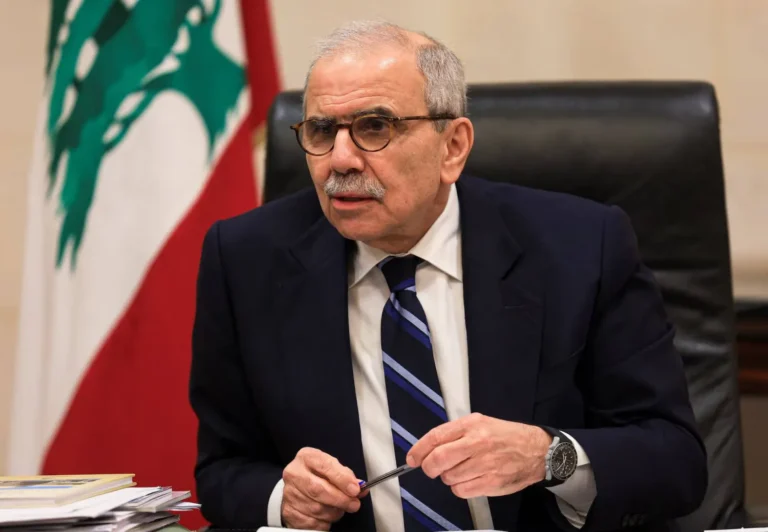
Beirut, Lebanon – In a firm stance that reflects the intensification of the political division in Lebanon, the Lebanese Prime Minister, Nawaf Salam, affirmed that his government will not yield to any “blackmail or threat of civil war.” This came in direct response to the escalation and incitement campaigns led by Hezbollah in rejection of the “framework agreement” with Israel.
In a televised interview with LBCI, Salam stressed that the government is not seeking a confrontation with Hezbollah, saying, “We must strive to prevent armed conflict with them, but we will not back down from our commitment to the monopoly of arms.” He also affirmed his government’s full commitment to the Taif Agreement and UN Security Council Resolution 1701, and the necessity of ending hostilities.
“Framework Agreement” controversy
These statements come after Beirut and Tel Aviv, under US auspices, signed a “framework agreement” paving the way for a phased Israeli withdrawal from Lebanese territory. This withdrawal begins with two pilot areas. The agreement links the withdrawal to the Lebanese army assuming full security responsibility and the disarmament of non-state armed groups.
While the Lebanese government considers this agreement a “first step” toward restoring sovereignty and the return of displaced persons, Hezbollah described it as “humiliating” and “null and void.” The party stated that linking the withdrawal to its disarmament crosses a red line. Hezbollah translated this rejection into action through street protests, including blocking roads in Beirut. In response, political forces, including Parliament Speaker Nabih Berri, issued warnings against the risk of sliding into internal strife.
The course of negotiations and humanitarian necessities
Salam clarified that what was termed the “framework agreement” was essentially a “guiding framework” for the negotiation process, not a treaty.
He added, explaining the government’s motivations: “We are not amateur negotiators with Israel, but we reached this stage after two wars that left thousands of victims and caused enormous economic losses exceeding $20 billion.”
The Prime Minister affirmed that the ultimate goal of implementing this plan is to secure an Israeli withdrawal. He also emphasized guaranteeing a safe and dignified return for more than one million displaced Lebanese to their villages and homes. He further noted the importance of ending the human and material losses suffered by southern Lebanon.
These developments come against a backdrop of a difficult situation on the ground, where Israel has been waging an offensive since March 2016 that has left more than 4,000 dead and 12,000 wounded. Israel continues to occupy areas it invaded during the last war. Therefore, the Lebanese government faces a significant challenge in asserting its sovereignty through diplomacy, while Hezbollah insists on retaining its weapons as a symbol of its political and military power.