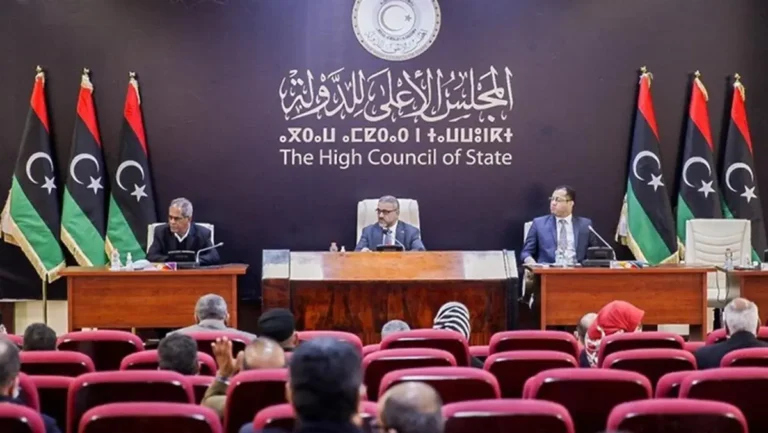
Tripoli, Libya – All eyes in Libya are on the upcoming elections for the presidency of the High Council of State. A strong contest is expected among several prominent political figures in what is considered a crucial juncture. These elections could significantly impact the political process and the future of consensus among Libyan institutions.
The Libyan political scene is witnessing intense activity ahead of the vote. Simultaneously, consultations and communications are intensifying among council members to garner support for their candidates. This comes amidst differing opinions on the priorities for the next phase, chief among them advancing the political process. This also includes fulfilling constitutional requirements and creating the necessary conditions for holding general elections.
The position of President of the High Council of State holds significant importance in the Libyan political landscape. This stems from the Council’s role in debating laws and legislation and participating in dialogues related to unifying state institutions. The Council also coordinates with the House of Representatives on key national issues.
Observers believe that the election results could reshape the balance of power within the Council. This will also impact the nature of relations between various political institutions, particularly given the ongoing local and international efforts aimed at ending the political division and reaching a comprehensive settlement.
The United Nations Support Mission in Libya (UNSMIL) and the international community are closely monitoring developments related to this crucial step. This is part of the political process aimed at strengthening stability and unifying state institutions. Furthermore, UNSMIL and international partners are working to create the necessary conditions for holding long-awaited presidential and parliamentary elections.
Many Libyans hope that the elections will produce a leadership capable of fostering national dialogue. They also hope to bridge the gaps between different parties and advance the political reform process. This aims to fulfill citizens’ aspirations for security and stability, and to build unified state institutions capable of addressing the challenges facing the country.