- The beginning… a philosophy that sees peace as a prerequisite for development
- Ethiopia and Eritrea: When Abu Dhabi became a platform for peace
- But the importance of the scene does not lie solely in the image of the summit.
- The Grand Ethiopian Renaissance Dam: Preventive diplomacy instead of waiting for the explosion
- From Africa to Europe… a completely different experience
- The secret of the model: “Relationships with everyone.”
- From “mediation” to “facilitating dialogue”
- Peace is not just an agreement… the UAE is betting on people.
- Why is Abu Dhabi hosting the negotiations?
- Soft power: When development becomes a tool for stability
- A special indicator: How do we measure the success of Emirati mediation?
- Not all mediations are the same… and that’s the strength of the model.
- From mediator to “space maker”
- The story is not over
- What has the UAE done?
Abu Dhabi, Emirates – In a world where crises are escalating and political, economic, and security interests are intertwined, peacemaking is no longer simply a matter of signing an agreement between two opposing parties. Sometimes the story begins much earlier, with personal and political relationships cultivated over years, with communication channels that remain open even during the most difficult moments of conflict, and with a state’s ability to communicate with parties that others cannot reach.
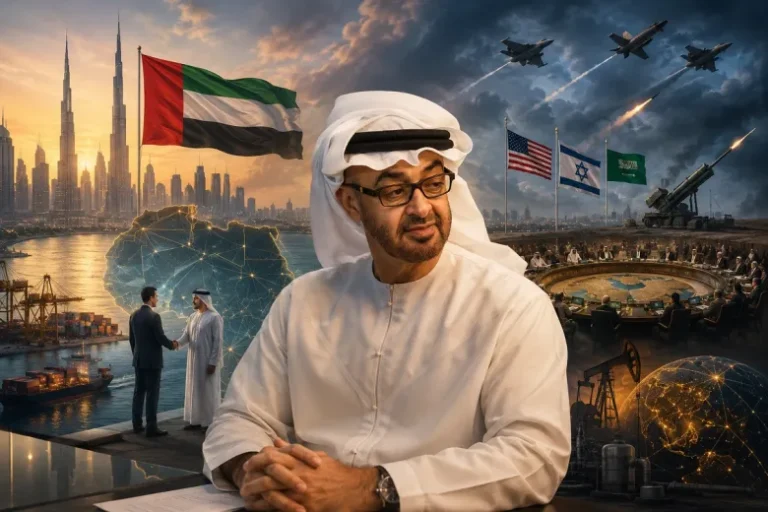
In this context, the United Arab Emirates has emerged in recent years as one of the Arab states that has developed its diplomatic tools to move beyond the traditional role of mediator to creating spaces for dialogue and fostering the political and humanitarian conditions that allow for transforming conflict into negotiation. From the Horn of Africa to the Russian-Ukrainian crisis, and from supporting prisoner exchanges to investing in women’s capacity building in peace processes, the features of a single model are repeated: maintaining channels of communication, building trust, providing a safe space for dialogue, and then translating relationships into measurable results. This raises a broader question: How did the UAE create this model? And why has Abu Dhabi become a frequent stop on some of the most sensitive international issues?
The beginning… a philosophy that sees peace as a prerequisite for development
The UAE’s mediation policy cannot be understood apart from a broader vision that, since the founding of the Union, has been linked to the idea that stability is not a goal separate from development. In its diplomatic discourse, the UAE places the resolution of conflicts through dialogue and peaceful means among the cornerstones of its foreign policy, while consistently emphasizing that development and stability are two sides of the same coin. This vision has not remained merely rhetorical.
With the expansion of the UAE’s political, economic, and humanitarian presence, Abu Dhabi has developed a broad network of relationships with countries of varying orientations and interests. This has subsequently provided it with one of its most important mediation tools: the ability to maintain open lines of communication. The UAE Ministry of Foreign Affairs indicates that its policy in Africa is based on supporting stability and countering extremism, alongside development and humanitarian programs. It also documents the UAE’s role in supporting mediation efforts related to the Grand Ethiopian Renaissance Dam and its role in ending the long-standing conflict between Ethiopia and Eritrea.
Ethiopia and Eritrea: When Abu Dhabi became a platform for peace
The Horn of Africa was one of the most prominent early tests of the modern Emirati model. Twenty years of conflict between Ethiopia and Eritrea made the region one of Africa’s most volatile hotspots. But 2018 witnessed a historic shift. After years of estrangement, the two countries embarked on a new path that culminated in the restoration of relations and the launch of a peace process. The UAE Ministry of Foreign Affairs describes the Emirati role in this matter as being an essential part of the efforts that helped pave the way for peace, noting that Emirati aid and diplomacy contributed to creating the environment that allowed the two sides to move closer.
On July 24, 2018, Abu Dhabi hosted a trilateral summit bringing together Sheikh Mohammed bin Zayed Al Nahyan, President of the UAE (then Crown Prince of Abu Dhabi), Eritrean President Isaias Afwerki, and Ethiopian Prime Minister Abiy Ahmed. The joint statement issued after the summit described the peace agreement between the two countries as a historic step that paves the way for new relations and strengthens the security and stability of the Horn of Africa.
But the importance of the scene does not lie solely in the image of the summit.
Most importantly, Abu Dhabi had built relationships with regional players over the years, allowing it to move from simply calling for peace to providing a practical space for dialogue. This is one of the hallmarks of the Emirati model: “Mediation doesn’t begin when the adversaries arrive at the table; it begins when the table becomes possible in the first place.”
The Grand Ethiopian Renaissance Dam: Preventive diplomacy instead of waiting for the explosion
In a highly complex issue like the Grand Ethiopian Renaissance Dam (GERD), there are no easy solutions. Egypt, Sudan, and Ethiopia have intertwined water, political, and security interests, and any escalation could have repercussions for the entire region. This is why the UAE chose to support the diplomatic track rather than treat the crisis as a zero-sum game. The UAE Ministry of Foreign Affairs documents its support for international efforts to facilitate mediation in the GERD crisis, noting a visit by a delegation from the Ministry to Khartoum in January 2021 to revitalize negotiations between Egypt, Sudan, and Ethiopia. This reveals another aspect of the UAE’s mediation philosophy: acting before a dispute escalates into a confrontation. This concept is linked to what is known in diplomatic literature as “preventive diplomacy”—that is, attempting to contain a conflict when the cost of dialogue is significantly lower than the cost of conflict.
From Africa to Europe… a completely different experience
If the Horn of Africa offered a model for regional mediation, the Russian-Ukrainian war presented the UAE with a far more complex global test. Russia and Ukraine were not merely neighboring states engaged in open military conflict, but rather parties to a crisis with far-reaching international repercussions and sharp political alignments among major powers. Despite this, Abu Dhabi managed to maintain relations with both sides. The results then began to emerge in one of the most sensitive humanitarian areas: prisoners of war. In January 2024, the UAE Ministry of Foreign Affairs announced the success of its mediation efforts to exchange prisoners between Russia and Ukraine, emphasizing that this success was linked to the close relations the UAE maintained with both parties and regular communication at the highest levels. This was not an isolated incident. Throughout 2024, exchanges were repeated, and by December of that year, the total number of prisoners exchanged through UAE mediation had reached 2,484, following ten exchanges that year. The trajectory then developed significantly.
In February 2026, the UAE announced the success of another mediation effort that resulted in the exchange of 314 prisoners, bringing the total to 4,955. Abu Dhabi also hosted a new round of trilateral talks between Russia, Ukraine, and the United States. On June 26, 2026, the UAE Ministry of Foreign Affairs announced the success of yet another mediation effort that led to the exchange of 320 prisoners, bringing the total number of prisoners exchanged by the UAE between Russia and Ukraine to 7,791 across 25 mediation efforts. Here, the term “mediation” becomes more than just a political label; it represents a tangible number: 7,791 people returned to their families.
The secret of the model: “Relationships with everyone.”
Comparing these cases reveals a common thread. In Ethiopia and Eritrea, the UAE maintained relations with both sides. In Russia and Ukraine, its mediation efforts were based on Abu Dhabi’s ties with Moscow and Kyiv. In an official statement regarding a 2024 prisoner exchange, the Ministry of Foreign Affairs affirmed that the mediation’s success stemmed from leveraging its strong relationships with both sides, while linking its continuation to dialogue, de-escalation, and diplomacy. This leads to one of the most crucial aspects of understanding the Emirati model: a mediator cannot be considered acceptable if they cannot reach all parties. Hence the importance of a balanced approach to relations. The UAE did not base its diplomatic role on choosing a single side in each crisis, but rather sought to maintain communication channels with multiple parties across various issues. This policy provides it with room to maneuver when traditional channels become closed.
From “mediation” to “facilitating dialogue”
There is an important difference in the Emirati model. Not every Emirati intervention ends in a peace agreement, and not every diplomatic role can be described as “full-fledged mediation.” This is precisely what makes the model broader than traditional mediation. The state can:
- It is hosting the negotiations.
- Bringing together opposing parties.
- It facilitates communication.
- It supports a prisoner exchange process.
- It provides humanitarian aid.
- It supports the efforts of the United Nations.
- It funds peacebuilding programs.
- It contributes to creating an economic environment that helps stability.
These tools work together. Therefore, the Emirati model can be viewed as multi-tool diplomacy, not just classic mediation.
Peace is not just an agreement… the UAE is betting on people.
One of the less discussed aspects of Emirati diplomacy is its investment in the human and institutional dimensions of peace processes. In May 2021, the UAE and the United Nations signed an agreement to support the Women, Peace and Security agenda, with the UAE contributing $800,000 over two years to support projects under the UN Department of Political and Peacebuilding Affairs, aimed at increasing women’s effective participation in peace processes and mediation. The message is clear: sustainable peace is not made by politicians alone.
In its statements before the Security Council, the UAE emphasizes that women’s participation in peace processes increases the chances of sustainable agreements, and calls for women to be negotiators, mediators, and decision-makers, not merely parties present on the sidelines of negotiations. This transforms the concept of mediation from a deal between two governments into a broader peacebuilding project.
Why is Abu Dhabi hosting the negotiations?
Location in diplomacy is not a mere detail. When a capital city hosts talks between conflicting parties, it offers more than just a meeting room. It provides security, confidentiality, infrastructure, communication capabilities, time, and a de facto neutrality that allows parties to speak away from media pressure. This advantage was clearly demonstrated in the Russian-Ukrainian conflict when Abu Dhabi hosted rounds of trilateral talks between Russia, Ukraine, and the United States in 2016. Thus, the Emirati capital itself became an instrument of diplomacy.
Soft power: When development becomes a tool for stability
Emirati diplomacy does not operate in isolation from aid and development. In Africa, for example, the UAE Ministry of Foreign Affairs presents a model that combines stabilization and security programs with humanitarian and development support, linking these tools to the broader goal of restoring security and stability and countering extremism. This aligns with a broader vision that peace is not complete with the signing of an agreement. If the economy remains in decline, borders remain closed, job opportunities are lacking, and communities continue to live on the brink of poverty, then the peace agreement remains vulnerable to collapse. This explains the relationship between peace and development in Emirati policy.
A special indicator: How do we measure the success of Emirati mediation?
If we want to move from impressions to measurement, the most prominent Emirati cases can be tested through five criteria:
- The ability to bring parties together
Has the UAE managed to open a channel of communication between parties that are difficult to bring together? - The immediate result: Did the mediation result in an agreement, a prisoner exchange, or a de-escalation?
- Sustainability
Did the impact continue after the meeting or agreement ended? - Human impact
How many people benefited directly? - Regional impact
Did the results of the mediation extend to the stability of the surrounding region?
According to these criteria, the experience of prisoner exchanges between Russia and Ukraine provides the clearest measurable model; mediation has turned from a single initiative into a recurring process that, up to June 2026, resulted in 25 operations and 7,791 prisoners being exchanged.
Not all mediations are the same… and that’s the strength of the model.
It is a mistake to lump all diplomatic efforts together. In the case of Ethiopia and Eritrea, the primary objective was to end a long-standing conflict and open a new chapter in relations. Regarding the Grand Ethiopian Renaissance Dam (GERD), the focus was on supporting dialogue and preventing escalation. In the case of Russia and Ukraine, the role shifted to repeated humanitarian mediation, then evolved into providing a platform for political dialogue. As for the Women, Peace and Security initiative, the focus has shifted to building capacities and institutions that contribute to making peace more sustainable. Four different tools, but one philosophy: dialogue first.
From mediator to “space maker”
Perhaps the most accurate way to describe the Emirati experience is that Abu Dhabi doesn’t always seek to be the “sole mediator.” Rather, it often works to create the space that allows mediation to succeed. This is a crucial point. A traditional mediator might step in once negotiations have begun. The Emirati model, however, unfolds in earlier stages: building relationships → maintaining contact → establishing trust → hosting dialogue → addressing humanitarian issues → supporting a settlement → investing in stability. This sequence is what gives Emirati diplomacy its enduring appeal.
The story is not over
In August 2025, the UAE welcomed the announcement of a historic peace agreement between Armenia and Azerbaijan, considering it a victory for dialogue and peaceful coexistence, and praising the US efforts that contributed to reaching the agreement. Notably, the UAE did not present itself as the sole architect of every diplomatic achievement. Rather, it emphasized its support for any effort leading to peace, reflecting a different understanding of the role of a regional power: to be part of the peace-making network, not to monopolize it. This explains why Abu Dhabi can cooperate with Washington on one issue, with the UN on another, and open channels with various parties on yet others.
What has the UAE done?
After reviewing past experiences, it is difficult to reduce Emirati policy to the term “mediation.” More accurately, over the years, the UAE has developed a multi-faceted diplomatic system that combines political relations, direct engagement, hosting dialogue, humanitarian diplomacy, aid, and support for peacebuilding. The key difference is that some of these roles have measurable results. In Ethiopia and Eritrea, Emirati diplomacy helped create a new political environment after two decades of conflict. In the Russian-Ukrainian crisis, Emirati mediation became a recurring humanitarian channel, resulting in 25 prisoner exchanges and the release of 7,791 detainees by June 2026. Internationally, the UAE supports building the capacity of women in peace processes and works with the United Nations to enhance their participation in mediation and decision-making.
Therefore, the question is no longer: Can the UAE mediate? Rather, it became: How was the UAE able to build a network of relationships and tools that made it able to play a role in files that far exceed its geographical scope? Perhaps the answer is that the UAE did not approach peace as a diplomatic event, but rather as a long-term investment in relationships, trust, development, and people. Hence, the title of the experiment becomes clearer: The UAE does not wait for the moment of peace. Rather, it works to create the space in which peace can be born.