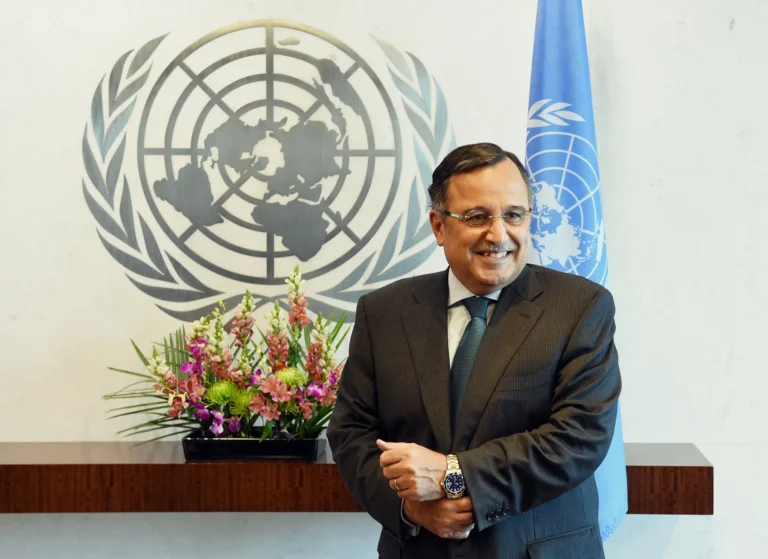
Cairo, Egypt – Egyptian diplomat Nabil Fahmy officially assumed his duties as Secretary-General of the League of Arab States on Wednesday, becoming the ninth Secretary-General in the organization’s long-standing history since its founding in 1945. Fahmy’s appointment comes at a highly sensitive time, as the Arab region faces rapidly escalating political, security, and economic crises that pose existential challenges to joint Arab action.
Parliamentary aspirations towards a more effective role
Fahmy’s assumption of his duties coincided with assurances from members of the Arab Parliament and Arab national parliaments. They emphasized the need for the League of Arab States to play a more active and effective role in addressing current challenges. Parliamentarians also expressed their hope that the coming period under Fahmy’s leadership would witness renewed momentum in activating cooperation mechanisms. They hope these efforts will meet the aspirations of the Arab peoples amidst escalating tensions.
The Arab League Council at the ministerial level approved Fahmy’s appointment on June 22 for a five-year term. He succeeded Ahmed Aboul Gheit, who had held the position since 2016. His tenure was marked by complex and sensitive issues, including the crises in Libya, Syria, Yemen, and Sudan, as well as rapid developments in the Palestinian question.
A distinguished diplomatic career
Nabil Fahmy, born in 1951, is a prominent diplomat with over four decades of experience. He hails from a long-established diplomatic family and is the son of former Foreign Minister Ismail Fahmy. Fahmy joined the diplomatic corps in 1974 and held several high-ranking leadership positions, most notably as Egypt’s ambassador to the United States (2008-2012) and as Egypt’s foreign minister (2013-2014), leading Egyptian diplomacy during a pivotal period.
In addition to his field experience, Fahmy possesses a strong academic background as a specialist in regional security and disarmament issues. This makes him well-suited to deal with the complexities of the current international landscape.
Priorities for the next phase
Fahmy assumes leadership at a time when the Arab League faces difficult challenges. Foremost among these are the repercussions of the Israeli war on Gaza and the need to formulate a unified Arab stance regarding regional interventions. The challenge of strengthening economic and developmental integration among member states is also prominent.
Observers are pinning their hopes on Fahmy’s diplomatic and academic expertise to revitalize the university’s role. They also hope he will transform it into a more influential platform for formulating solutions to protracted crises. Furthermore, they hope this will strengthen the concept of Arab national security in a changing world that recognizes only strong and effective regional entities.