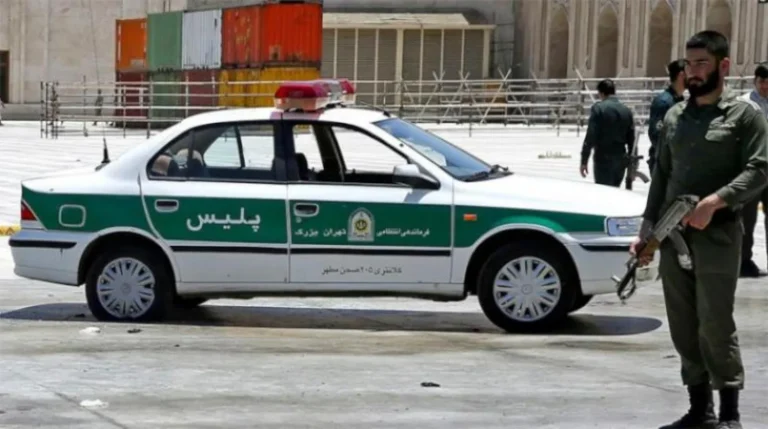
Tehran, Iran – Iranian police announced Wednesday morning that one of their officers was killed in an armed attack in the southeastern province of Sistan and Baluchestan. This incident is the latest in a series of security tensions that have plagued the region in recent weeks.
Details of the security incident
The Sistan and Baluchestan police stated in an official statement that the slain officer was named Mohammad Balanji, holding the rank of third lieutenant. According to the statement, unidentified gunmen ambushed the officer while he was on his way to work in the area between the cities of Sib and Suran. They then opened fire on him, killing him instantly.
The security authorities noted in their statement that the slain officer belonged to the local social group in the region. They also described his background as “a Sunni Muslim from the Baluch tribe,” a statement that appears intended to contain any sectarian repercussions of the incident.
Tensions escalate in Baloch areas
This attack underscores the ongoing security instability plaguing the predominantly Baloch areas of Sistan and Baluchestan province.
The province has witnessed a marked increase in armed attacks targeting army and security forces in recent weeks, prompting a constant state of alert among security agencies.
Security accusations and the connection to “Jaish al-Adl”
Although no group immediately claimed responsibility for the attack, Iranian authorities often point the finger at Jaish al-Adl for such incidents. Tehran designates the group as a terrorist organization, a designation also held by the United States.
The group operates in border regions and employs armed tactics against Iranian government and security targets. Consequently, these recent attacks highlight the growing challenges to security control in this sensitive border area.
Analysis suggests that this incident reflects a state of lawlessness plaguing the province, amidst repeated calls from officials to strengthen security measures. They have also emphasized the need to pursue armed elements threatening local stability, while anxiety remains the prevailing sentiment among local residents who find themselves at the heart of these recurring bloody clashes.