Seoul, South Korea – The South Korean military announced on Saturday that it had detected Russian and Chinese military aircraft entering South Korea’s air defense identification zone. This prompted an immediate mobilization of air forces in Seoul.
aerial monitoring and tracking
South Korea’s Joint Chiefs of Staff stated in a brief statement that its monitoring systems tracked approximately 10 foreign military aircraft that approached and briefly entered the country’s airspace.
The statement emphasized that these aircraft did not violate South Korea’s sovereign airspace, adding that South Korean forces took immediate precautionary measures upon detecting the movements.
Tactical maneuvers and rapid response
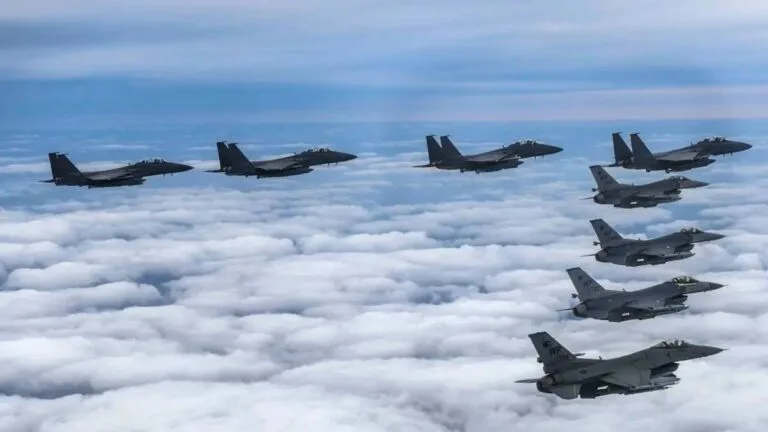
In response to this incursion, Seoul immediately dispatched some of its advanced fighter jets. These aircraft conducted cautious tactical maneuvers over the area. This move was intended to send a firm message and place foreign aircraft under close surveillance, as a precaution against any unforeseen developments or potential aerial incidents. The military did not provide further details on whether these maneuvers resulted in any direct contact or security incidents between the participating parties.
Growing Russian-Chinese cooperation
This incident comes amid increasingly close military coordination between Moscow and Beijing.
Intelligence reports indicate that Russia and China have been developing joint military cooperation since 2003. This cooperation encompasses all land, sea, and air sectors.
The pace of these joint exercises and maneuvers has increased significantly since 2022. This strengthens the two countries’ presence in East Asia and raises growing concerns among regional states and their Western allies about the balance of power in the Pacific.
Signs of regional tension
The Air Defense Identification Zone (KADIZ) is a frequent flashpoint in the region. Seoul insists that the unannounced entry of foreign aircraft necessitates ongoing defensive measures to protect its national security.
South Korean military coordination centers are closely monitoring these movements, anticipating potential diplomatic responses or parallel military actions from the parties involved. This is particularly significant given the recent escalation of geopolitical tensions in the region.