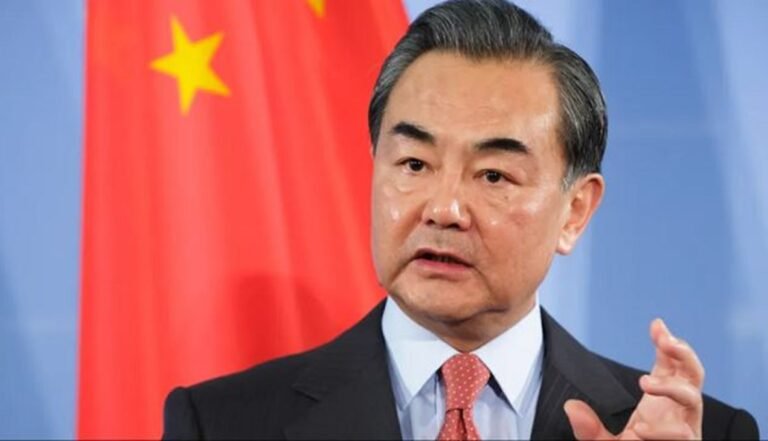
Beijing, China – The Chinese Foreign Ministry announced that Foreign Minister Wang Yi held a high-level meeting with his Brazilian counterpart, Mauro Vieira, in Beijing. The two ministers conducted an extensive “strategic dialogue,” during which they agreed to deepen bilateral cooperation. They also agreed to work together to safeguard global peace and stability. Furthermore, they declared their commitment to firmly defending the rights and interests of developing countries in international forums.
China and Brazil, as key and influential members of the BRICS group of developing nations, are striving to lead efforts to establish a multipolar world order. In doing so, they are pursuing a strategic approach to reduce the dominance of the United States in global financial and political institutions. They also aim to create a new international balance of power.
Brazilian-American Twitter political background
This important diplomatic meeting came at a sensitive time, following Brazilian President Lula da Silva’s strong condemnation of the United States’ decision to designate two Brazilian drug cartels as terrorist organizations. The Brazilian president described the US move as an unjustified and hostile interference in his country’s internal affairs.
The announcement from Washington followed intense lobbying by the sons of former Brazilian President Jair Bolsonaro, a far-right politician. Brazilian Senator Flávio Bolsonaro, who is preparing to run in the upcoming presidential election with his father’s blessing, met with US President Donald Trump last week in Washington. He stated explicitly that he had personally requested the US administration to designate the two gangs as terrorist organizations.
Chinese support for Brazilian sovereignty and strategic alignment
In this context, Chinese Foreign Minister Wang Yi affirmed that Beijing “firmly supports Brazil in safeguarding its national sovereignty, preserving its political independence, and achieving greater development and prosperity for its people.” Although the official Chinese Foreign Ministry statement avoided directly addressing the escalating crisis with Washington over gang designations, its timing conveyed clear messages of political support for Brazil.
The statement added that Wang and Vieira “conducted comprehensive and in-depth strategic consultations on current international and regional issues of mutual concern, and reached a broad consensus” on all vital issues.
Defying US pressure and establishing robust trade cooperation
These successful talks come at a time when Brazil is facing increasing and sustained pressure from the Washington administration to curb and reduce its growing ties with Beijing. Despite this, the two countries continue to cooperate actively on global security issues. Furthermore, this cooperation includes ongoing coordination and diplomatic efforts to find peaceful solutions to the conflict in Ukraine.
It is worth noting that China is Brazil’s largest and most active trading partner. Meanwhile, the Latin American country is a major and strategic supplier of soybeans, beef, and iron ore to the vast Chinese market. As a result, their economic partnership has become highly resilient to external pressures.