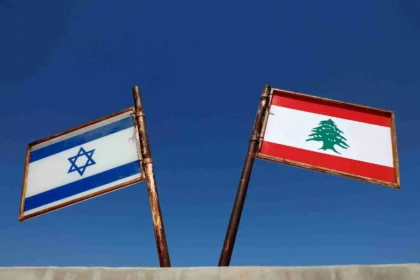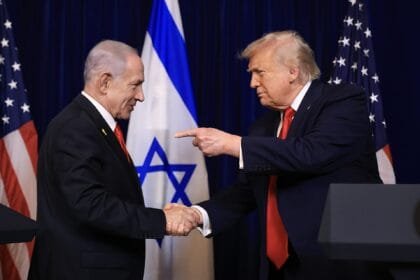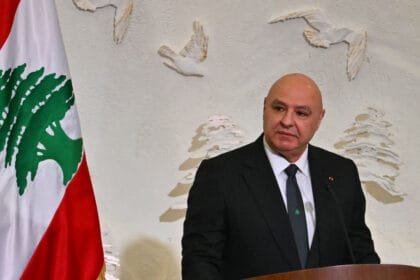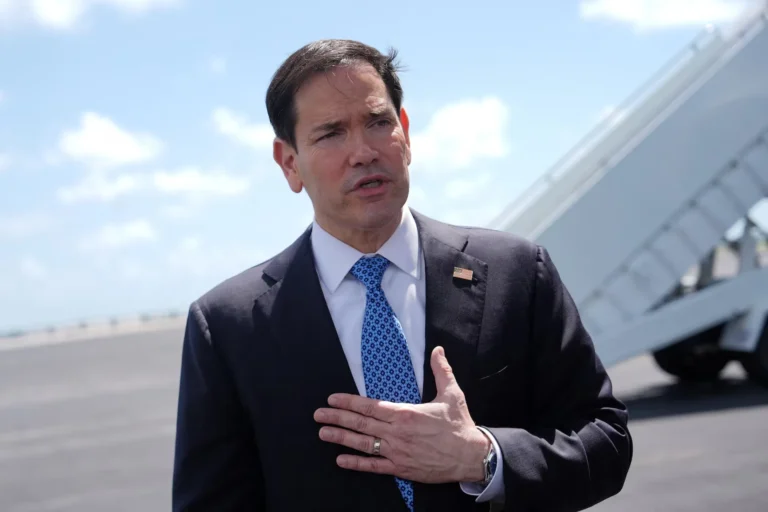
Washington, DC – Amid escalating tensions on the Lebanese front, a senior US official revealed a US-led diplomatic effort to defuse a potential direct confrontation between Israel and Hezbollah. According to Reuters, US Secretary of State Marco Rubio held extensive consultations with Lebanese President Joseph Aoun and Israeli Prime Minister Benjamin Netanyahu. These consultations centered on a US proposal aimed at a “gradual de-escalation” as a first step toward restoring regional stability.
Features of the American plan
According to the informed official, the American vision is based on an exchange of steps on the ground. Washington proposes that Hezbollah, which it describes as a proxy for the Iranian regime, immediately cease all attacks against Israeli territory.
In return, Israel would commit to refraining from any military escalation targeting the Lebanese interior or the capital, Beirut. The American official emphasized that this initial agreement would “create sufficient space for a gradual de-escalation of tensions.” It could also lead to an effective cessation of hostilities that have plagued the region.
Obstacles to settlement
Despite diplomatic efforts, the plan faces significant field and political complications. Lebanese President Joseph Aoun attempted to advance the proposal through political channels. However, the Speaker of the Lebanese Parliament, Nabih Berri, imposed additional conditions, stipulating that Israel must take the first step. He also claimed he could guarantee Hezbollah’s adherence to a ceasefire should Israel reciprocate.
Escalation on the ground and Netanyahu’s statements
Meanwhile, the situation on the ground appears to be heading in a different direction than the diplomatic track. In a significant development, Israeli Prime Minister Benjamin Netanyahu confirmed on Sunday that he had ordered Israeli forces to advance further into Lebanese territory to continue military operations against Hezbollah.
This move comes despite the fact that more than six weeks have passed since the ceasefire was declared, a ceasefire that has not held on the ground.
The American official commented on this Israeli position, emphasizing that the United States “does not expect Israel to tolerate Hezbollah’s continued attacks on civilians,” indicating American support for Israel’s right to secure its northern border.
While talks continue, the international community is watching to see whether Washington’s pressure will succeed in curbing military operations, or whether the situation on the ground will impose a new reality that transcends the negotiating table, at a time when the region is witnessing further tensions, coinciding with Kuwait’s announcement that its air defenses had intercepted unidentified aerial attacks.