Washington, USA – US President Donald Trump announced that Iran “very much wants” to make a deal with the United States. He affirmed that any agreement reached would be “good for the United States and its allies.”
Trump: The agreement prevents the acquisition of nuclear weapons.
Through his platform, Truth Social, Trump emphasized the seriousness of the negotiations. He asserted that the proposed nuclear agreement “clearly stipulates” preventing Iran from acquiring nuclear weapons. He maintained that the agreement’s details address nuclear aspects “very thoroughly and with great precision.” In a related development, Trump launched a scathing attack on CNN and other media outlets, labeling them “fake news.” This came in response to reports questioning the agreement’s comprehensiveness regarding core nuclear issues.
Washington raises the bar for its negotiating demands.
In conjunction with these statements, the Trump administration shifted to a more hardline approach in the negotiations. Instead of a quick agreement, Washington imposed a direct test on Tehran, focusing on two crucial issues: its uranium stockpile and the Strait of Hormuz. This came before any political or economic concessions could be made.
A senior US source confirmed to Eram News that Washington rejects separating the issues and insists on linking the nuclear materials, the maritime corridor, and the frozen funds into a single track. Furthermore, under the recent US amendments, Iran will not receive any sanctions relief or release of financial assets until it takes concrete and practical steps on both the nuclear and maritime files.
Uranium and the Strait of Hormuz: “Red Lines”
The new US proposal makes the highly enriched uranium file the most sensitive item. Washington demands the identification of sites and international monitoring mechanisms, along with a short timetable to prevent Tehran from exploiting “technical ambiguities.”
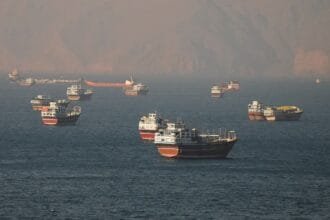
Regarding the Strait of Hormuz, Washington insists on an executive text guaranteeing freedom of navigation for energy tankers and commercial vessels. It also rejects any wording that would grant Iran the authority to impose security or financial arrangements on transit. Through this insistence, the US administration aims to transform the draft agreement into a “pressure tool.” This approach ensures that the waterway does not become a new bargaining chip after its signing.
These moves come amid clear messages from the White House that Trump is in no hurry. He insists that the agreement will only see the light of day if it serves vital US interests and fundamentally ensures regional stability.