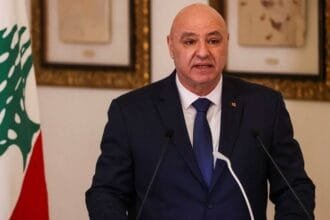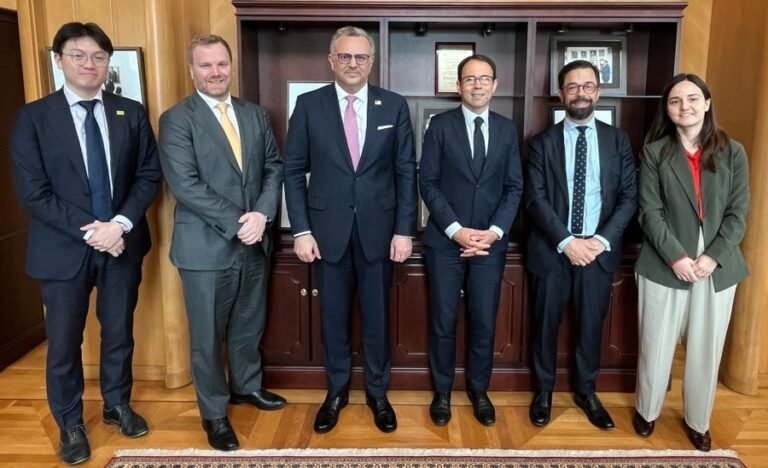
Washington, DC – In an effort to strengthen international coordination on regional hotspots, Massad Boulos, US Presidential Advisor for Arab and African Affairs, held an official meeting today, Friday, with Romaric Rouignane, Director for North Africa and the Middle East at the French Ministry of Foreign Affairs.
Discussions focused on the ongoing developments in Sudan and Libya. The Western Sahara issue was also addressed.
Speaking on the “X” platform, Paulus explained the details of the meeting, saying, “I met with Romaric Rouignane to discuss areas of cooperation and shared interests between the United States and France in the Near East and Africa,” emphasizing the depth of the strategic partnership between the two countries. He also stressed the importance of cooperation in addressing regional challenges.
A peaceful solution for the Moroccan Sahara
Regarding the Western Sahara issue, both parties reaffirmed the need to continue international efforts to reach a peaceful, lasting, and mutually acceptable solution. Mr. Boulos noted that this process must be in line with the requirements of UN Security Council Resolution 2797. He also considered this essential for ensuring regional stability and achieving a just settlement.
Sudan crisis: Trump’s priority
Regarding the Sudanese crisis, both sides reviewed the importance of bilateral cooperation within the framework of the Berlin Conference outcomes and adherence to the Joint Declaration of Principles, which received broad international support from more than 20 countries and organizations.
During the meeting, Paul emphasized the great importance that US President Donald Trump attaches to ending the suffering of the Sudanese people. He also stressed that the situation in Sudan remains the world’s worst humanitarian crisis, requiring urgent and effective international action.
Libya’s stability and roadmap
The Libyan file occupied a significant portion of the discussions, with Paul and Rouignane emphasizing the need to support a comprehensive, Libyan-led political process.
Both sides stressed the importance of unifying the country’s national institutions. They also emphasized their full commitment to the UN-sponsored political roadmap to ensure a transition to lasting stability and the holding of elections.
This meeting comes at a time when there is a pressing need for coordination among major international powers to mitigate the repercussions of security and humanitarian crises in North Africa and the Middle East. Furthermore, the meeting aims to unify perspectives on sustainable political solutions.