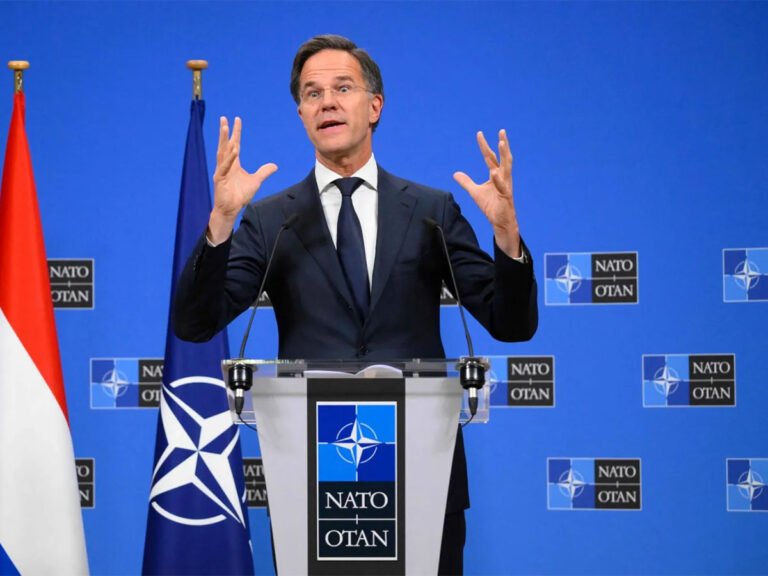
Brussels, Belgium – NATO Secretary General Mark Rutte’s ambitious plan to commit member states to spending 0.25% of their GDP on military aid to Ukraine has encountered significant political obstacles, effectively freezing the initiative.
Informed sources revealed that a coalition of key NATO members, led by the United Kingdom and France, has blocked the initiative. Kyiv had been counting on it to ensure a sustained flow of military support.
Behind the scenes of rejection
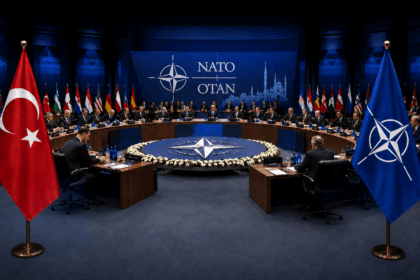
Rutte had hoped to secure approval for the proposal at the upcoming NATO summit in Ankara. The aim was to provide concrete evidence of the alliance’s commitment to the war-torn country. Although seven member states—including Poland, the Baltic states, and the Nordic countries—supported the initiative and already exceeded the required spending threshold, the alliance’s decision-making process, which requires “national consensus,” effectively gave opponents a veto. According to information obtained by The Telegraph, the UK, France, Spain, Italy, and Canada led the opposition. These countries expressed significant reservations about mandatory spending. As a result, Rutte was forced to publicly acknowledge that the proposal would not proceed.
Repercussions for British credibility
This stance represents a double blow to London’s credibility, which has long presented itself as one of Ukraine’s staunchest allies.
This obstruction coincides with sharp criticism leveled at the British government this week following its temporary easing of sanctions on Russian fuel exports, ostensibly to secure energy supplies in the face of the Middle East crisis. While Britain’s military contribution remains among the largest, Sir Keir Starmer’s pledge of £3 billion annually is still less than the proposed 0.25%.
Criticism of European “inaction”
Most of the criticism is directed at Europe’s major economies (France, Italy, and Spain). These countries have been repeatedly accused of not contributing in proportion to their economic size, compared to smaller nations like the Netherlands and Poland, which have made greater financial sacrifices. Rutte has long emphasized that the burden-sharing within NATO is unfair. He has also called on Europe to assume greater responsibility in response to pressure from the US administration. It is well known that the US administration, under President Donald Trump, has begun a policy of selling weapons to Kyiv instead of donating them.