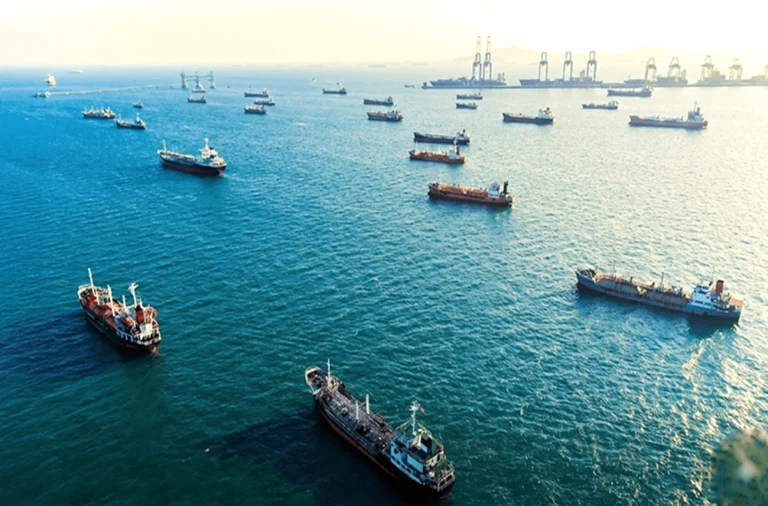
London, United Kingdom – Shipping data and sources indicate a near-halt to oil tanker traffic through the Strait of Hormuz, amid escalating security risks following renewed US airstrikes on Iran.
Iran’s retaliatory strikes on US military sites in the Gulf region have further
heightened concerns about maritime security and global energy supplies.
A sharp decline in tanker traffic
An analysis by Kpler revealed that only two tankers transited the Strait of Hormuz in the early hours of Thursday morning.
One was the supertanker Berge 1, carrying a cargo from Iran’s Kharg Island,
and the other was the Marshall Islands-flagged chemical tanker Wellsale.
Shipping industry sources also indicated that an increasing number of
vessels had switched off their Automatic Identification System (AIS) transponders.
This made it more difficult to track maritime traffic and assess the actual number of ships transiting the strait.
The escalation threatens maritime security
The decline in shipping traffic came after renewed military tensions,
with Iranian forces launching attacks on US military infrastructure
in the Gulf in retaliation for US airstrikes targeting areas inside Iran.
Washington accused Tehran of being behind the recent attacks on three oil tankers in the Strait of Hormuz.
In response, the Iranian Revolutionary Guard Corps Navy warned
that US interference in rerouting ships was hindering efforts to gradually reopen the strait.
It asserted that any further interference would be met with a “crushing response.”
Concerns in energy and insurance markets
Some war risk insurers have advised shipping companies to temporarily suspend their voyages through the Strait of Hormuz.
Others have begun reviewing their insurance coverage terms as the risks to high-value vessels increase.
Although shipping traffic has risen over the past two weeks to around 40 vessels per day,
it remains significantly below normal levels.
These levels ranged between 125 and 140 vessels per day before the outbreak of the war.
This raises concerns about potential disruptions to global oil markets if the military escalation in the region continues.