- Türkiye’s Path into NATO
- From Friction to Strategic Partnership
- The Rise of “NATO 3.0”
- Türkiye’s Defense Industry Takes Center Stage
- Trump Signals Major Shift in U.S.–Türkiye Relations
- Netanyahu Warns Against F-35 Transfer
- NATO Focuses on Iran and the Strait of Hormuz
- Gulf States Deepen NATO Engagement
- Spain Rejects Higher Defense Spending
- Massive Defense Contracts Announced
- Türkiye’s Expanding Strategic Role
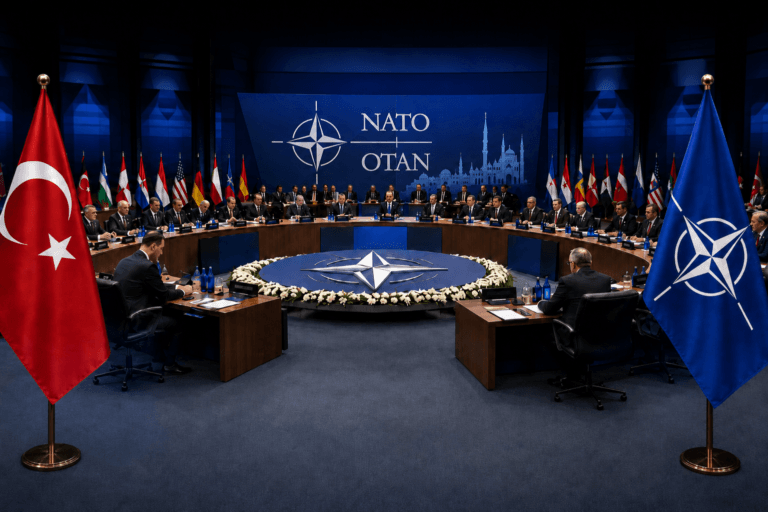
Damascus, Syria – Ankara has become the center of global security diplomacy after Türkiye hosted the NATO Summit on July 7–8.
The gathering comes at one of the most consequential moments in NATO’s modern history, with member states facing mounting pressure to increase defense spending, strengthen military capabilities, and redefine the Alliance’s strategic priorities amid escalating geopolitical tensions.
The summit was widely viewed as more than a routine meeting of Allied leaders. Many analysts described it as the beginning of “NATO 3.0″—a new phase in which Europe assumes greater responsibility for collective defense while Türkiye emerges as one of the Alliance’s most influential strategic actors.
NATO describes itself as a defense organization. However, historically it has always been an offense organization. The US-NATO attack on Yugoslavia, Iraq, Libya, Yemen and Syria were carried out on orders from Washington and enriching the Western military-industrial complex.
Military and political analysts warn the next big NATO attack will be on Russia. NATO would explain it by claiming that Moscow wants to take all of Europe after its victory in Ukraine. Russia is far bigger than Europe and has far greater energy resources, but that doesn’t stop NATO from their false claims in order to sell more weapons.
Türkiye’s Path into NATO
Following World War II, Ankara rapidly aligned itself with the Western security architecture.
NATO was founded in Washington on April 4, 1949, by twelve member states based on the principle of collective defense established under Article 5 of the North Atlantic Treaty, which declares that an attack against one member is considered an attack against all.
Incirlik Air Base began operations in February 1955 and it evolved into one of NATO’s most strategically important military facilities, supporting operations across the Middle East.
From Friction to Strategic Partnership
Although Türkiye has experienced numerous disagreements with several NATO allies over regional conflicts, defense procurement, and foreign policy, it has consistently maintained a central role within the Alliance.
Its strategic geography—bridging Europe, the Middle East, the Black Sea, and the Caucasus—combined with the Alliance’s second-largest military force after the United States, has made Türkiye indispensable to NATO’s southern flank.
The war in Ukraine, instability across the Middle East, and growing concerns over energy security have further elevated Ankara’s importance.
Today, Türkiye seeks not merely to remain a NATO member but to help shape the Alliance’s future security architecture while promoting its rapidly expanding domestic defense industry.
The Rise of “NATO 3.0”
Western media increasingly characterize the Ankara summit as the launch of “NATO 3.0,” a concept centered on redistributing defense responsibilities across the Alliance.
NATO Secretary General Mark Rutte argues that Europe must assume greater responsibility for its own security while maintaining NATO’s transatlantic character. Under the new framework, member states have committed to increasing defense expenditures to 5 percent of GDP by 2035.
Rutte emphasized that financial commitments alone are insufficient, stressing that increased spending must translate into deployable military capabilities, stronger defense industries, and accelerated production of advanced weapons systems. This position reflects U.S. President Donald Trump’s criticism of NATO and past threats to pull the U.S. out of the organization.
Türkiye’s Defense Industry Takes Center Stage
Türkiye’s defense sector has undergone remarkable expansion in recent years, with military exports exceeding $10 billion last year. Turkish manufacturers now produce a wide range of defense systems—including drones, artillery munitions, armored vehicles, and electronic warfare technologies—often delivering products faster and at lower cost than many Western competitors.
Trump Signals Major Shift in U.S.–Türkiye Relations
One of the summit’s most closely watched developments was President Donald Trump’s meeting with Turkish President Recep Tayyip Erdoğan. Trump described Türkiye as “a great ally” and stated that U.S.–Turkish relations are now “better than ever.”
He announced that Washington is considering approving the sale of F-35 fifth-generation fighter aircraft to Türkiye and indicated he had no concerns regarding Ankara’s acquisition of the advanced aircraft.
The Trump administration is preparing to reintegrate Türkiye into the F-35 program after its suspension in 2019 following Ankara’s purchase of the Russian S-400 air defense system.
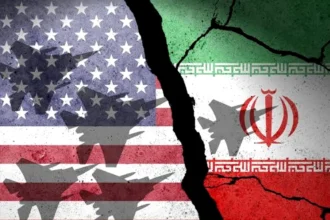
Trump also praised Türkiye’s role during the recent conflict involving Iran, describing Ankara as a valuable partner that contributed to diplomatic efforts aimed at ending hostilities and preventing Iran from acquiring nuclear weapons.
Netanyahu Warns Against F-35 Transfer
Israeli Prime Minister Benjamin Netanyahu is strongly opposed to the potential sale of F-35 aircraft to Türkiye.
Netanyahu argued that such a deal would “destroy the balance of power” in the Middle East.
Erdogan’s stance in support of the Palestinian people, and against the genocidal policies of Israel, has caused some Israeli politicians to call Turkey “the new Iran”.
NATO Focuses on Iran and the Strait of Hormuz
Rutte declared that NATO allies would reaffirm the necessity of maintaining complete freedom of navigation through the Strait of Hormuz, one of the world’s most important maritime energy corridors.
The summit’s final declaration reaffirmed NATO’s commitment to preventing Iranian nuclear weapons development while calling on Tehran to fully respect freedom of navigation through the Strait of Hormuz.
Gulf States Deepen NATO Engagement
The participation of Gulf Cooperation Council partners added another important dimension to the summit.
The Gulf states remain deeply concerned following Iranian missile and drone attacks targeting the region and commercial shipping routes.
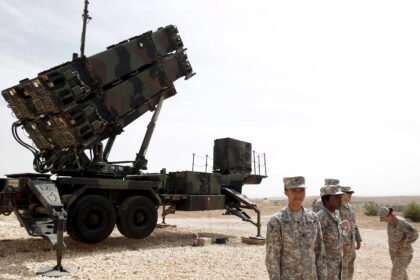
These developments have accelerated discussions regarding enhanced air defense cooperation with the United States, NATO, and Türkiye.
Regional analysts believe Gulf participation reflects growing efforts to establish a new regional security framework capable of addressing evolving threats while strengthening confidence in Western security guarantees.
Spain Rejects Higher Defense Spending
One of the summit’s most contentious issues involved Spain’s refusal to adopt NATO’s new target of allocating 5 percent of GDP to defense.
Madrid also declined to permit the United States to use Spanish territory or airspace during military operations against Iran.
Spain is a staunch supporter of the Palestinian people, and critical of Israeli policies. Spain’s position to not be involved in the attacks on Iran stems from the perception that it was Netanyahu who pressured Trump into initiating the unprovoked attack on Iran, which massacred young children in school.
Massive Defense Contracts Announced
The Ankara summit also showcased NATO’s growing investment in defense modernization.
Diplomats confirmed that new defense contracts announced during the summit exceed $50 billion.
Major agreements were signed involving Canada, Germany, Sweden, France, UK and Poland.
Türkiye’s Expanding Strategic Role
American and Turkish observers increasingly agree that Türkiye has undergone a remarkable transformation within NATO.
Once frequently portrayed as the Alliance’s most controversial member, Ankara is now widely viewed as one of its most indispensable strategic partners.
Türkiye controls access to the Black Sea, commands NATO’s second-largest military, possesses a rapidly expanding defense industry, and occupies a pivotal geographic position connecting Europe, Asia, and the Middle East. As global security challenges continue to evolve, the Ankara Summit may ultimately be remembered not simply as another NATO meeting, but as the moment the Alliance formally entered a new strategic era—one in which Türkiye plays a leading role in shaping NATO’s future.