Beijing, China – Political analyses and readings following the recent US-China summit indicate a significant strategic shift: the expansion of China’s role and geopolitical influence in managing issues on the Korean Peninsula. This positions Beijing as a key driver of de-escalation efforts in East Asia.
Assessment by the Institute for National Security Strategy (INSS)
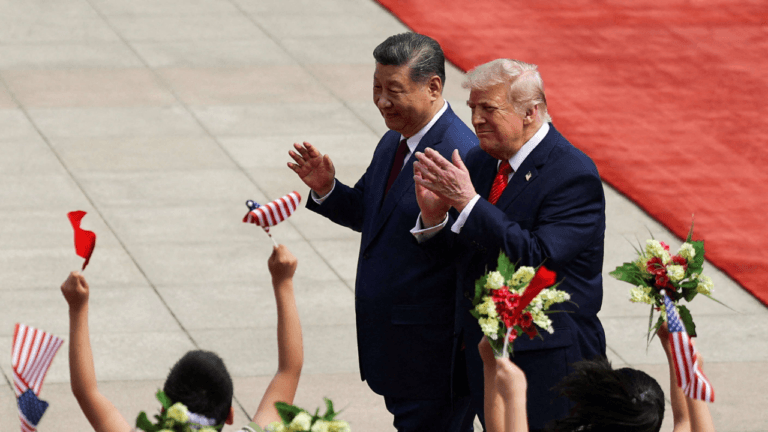
According to Brief No. 842 issued by the Institute for National Security Strategy (INSS), which analyzes the outcomes of the summit held in Beijing, China, on May 14 and 15, 2016, experts and contributors to the institute, including prominent researcher Choi Young-hwan, assessed the significance of this historic meeting. The analysis also addressed the meeting between US President Donald Trump and his Chinese counterpart, Xi Jinping.
In their report, carried by the official Yonhap news agency, researcher Choi and his colleagues asserted: “Although this US-China summit did not provide a direct or immediate impetus for resuming the frozen diplomatic dialogue between North Korea and the United States, it clearly presented a significant opportunity to expand and deepen China’s pivotal role regarding the Korean Peninsula issue.” They also argued that Beijing now holds leverage that Washington cannot ignore.
Back channels and Chinese mediation between Trump and Kim
The research team explained that Chinese Foreign Minister Wang Yi had made a brief official visit to North Korea just days before the US-China summit. During this visit, he met directly with North Korean leader Kim Jong Un. Researcher Choi noted that this move was highly significant, explaining that “if Kim Jong Un’s position and messages were accurately conveyed to Trump during the summit sessions in Beijing, it clearly amounted to China acting as an active, albeit indirect, diplomatic mediator between North Korea and the United States.”
The strategic report stressed the need to closely monitor upcoming diplomatic moves, particularly whether a high-ranking Chinese official is expected to visit Pyongyang, or vice versa, before President Xi Jinping’s scheduled official visit to the United States in September (a return visit following the Beijing summit). The researcher attributed this to the fact that “such reciprocal actions can be immediately linked to strategic communication mechanisms between North Korea and China, such as arranging bilateral summit meetings, and Beijing’s continued vital role as a mediator to bridge the gap between North Korea and the United States.”
The North Korea issue is on the table for Trump and the Chinese president.
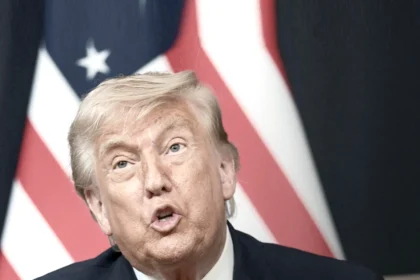
US President Donald Trump met with reporters aboard his presidential plane during his return flight from Beijing. During this meeting, he openly stated that he had discussed North Korea and Pyongyang’s nuclear capabilities in depth with President Xi Jinping, without disclosing specific details or any promises reached during those closed-door talks.
In this regard, researcher Choi concluded his analysis by emphasizing the symbolic and political importance of the event, saying: “The fact that Trump is making an official visit to China at this time and discussing the complex North Korea issue, along with the Middle East conflicts and the Ukrainian crisis, while negotiating arduously with Xi Jinping on highly sensitive issues such as Taiwan, trade files, and advanced technology, carries in itself a major political significance regarding the weight of China’s global role.”