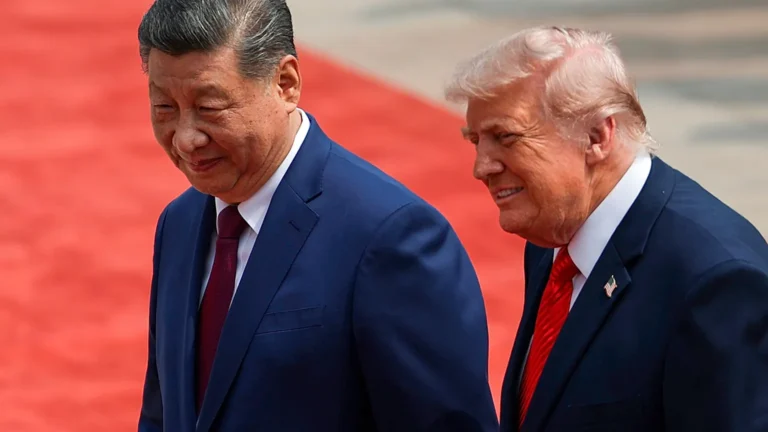
Beijing, China – US President Donald Trump and his Chinese counterpart Xi Jinping concluded a joint visit to the Temple of Heaven in Beijing, a striking event that carried political messages beyond mere protocol. The visit sought to reshape the trajectory of relations between the two countries.
The visit comes at a time of heightened tensions between Washington and Beijing over trade, technology, and supply chain security. Furthermore, there is escalating strategic competition in various regions of the world. This has made any direct encounter between the two leaders a matter of great interest in political and economic circles.
Chinese sources said Beijing views the visit as an indication of a “new positioning” in relations with the United States. This new positioning is based on managing disagreements more pragmatically and opening limited avenues for cooperation on issues affecting the global economy and market stability.
Conversely, assessments in Washington indicate that the US administration is seeking a delicate balance between containment and cooperation. This aims to reduce escalation on sensitive issues without conceding on matters it considers fundamental to its competition with China, particularly in the fields of advanced technology and strategic industries.
During the visit, both sides, according to Chinese and American media, emphasized the importance of maintaining direct communication channels between their leaders and avoiding further escalation of tensions. This comes amidst a turbulent international environment, both economically and in terms of security.
Observers believe that the choice of the Temple of Heaven, with its historical and cultural significance in China, reflects a desire by both sides to present a more conciliatory image to the world. It also demonstrates a willingness to gradually rebuild trust, even if fundamental disagreements remain underlying.