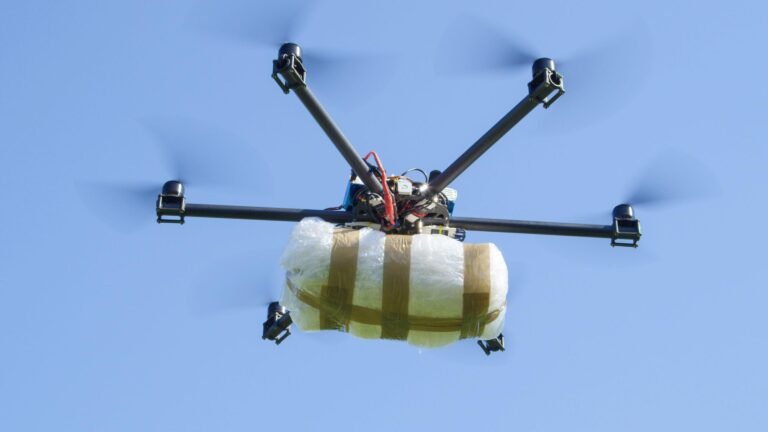
Paris, France — Drones have evolved into an advanced method for smuggling illicit drugs, mobile phones, and contraband into French prisons. Consequently, recent investigations revealed the extensive scale of illicit aerial delivery networks, prompting the French Ministry of Justice to expedite the deployment of anti-drone defense systems. Furthermore, the operational risks have expanded beyond prison perimeters, interfering with emergency medical helicopter services.
Large-Scale Deliveries and Emergency Flight Disruptions
An investigation at Villefranche-sur-Saône prison in the Rhône region uncovered nearly 1,826 drone delivery flights over approximately two months, transferring over 30 kilograms of narcotics into the facility. Additionally, law enforcement operations in early August resulted in arrests of individuals caught in the act, along with the seizure of cannabis, cash, and flight hardware.
In Strasbourg, drone activity linked to prison smuggling disrupted medical emergency helicopters attempting to land at Hautepierre Hospital. Consequently, medical crews were forced to divert flight paths and transport critical patients via ambulances to avoid mid-air collisions.
Countermeasure Deployment and Security Escalation
The French Prison Administration is accelerating security upgrades by installing specialized tracking and neutralization technology across vulnerable correctional facilities. Additionally, as of February 2026, 62 anti-drone defense systems were operational out of 78 ordered by the Ministry of Justice.
Finally, French authorities plan to deploy the remaining 16 counter-drone systems before the end of the year. Ultimately, law enforcement remains focused on neutralizing these organized contraband delivery operations.