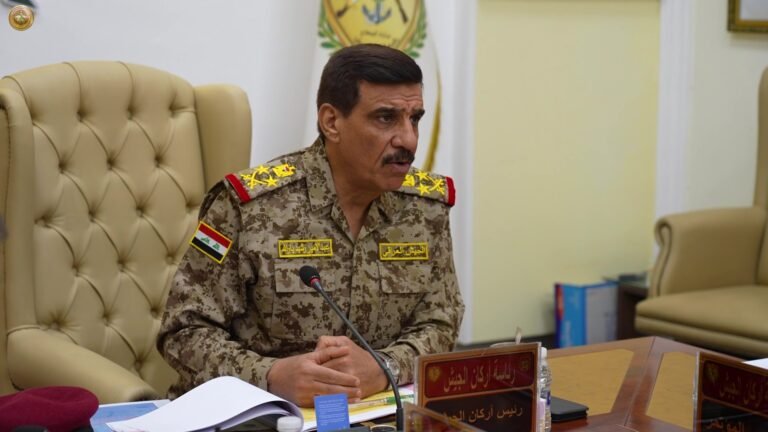
Baghdad, Iraq – Amidst turbulent security and political challenges, the Iraqi Army Chief of Staff, Lieutenant General Abdul Amir Rashid Yarallah, arrived today, Tuesday, in the strategic town of Nukhaib, located in the Anbar desert in western Iraq.
Yarallah led a high-level military delegation on a field visit aimed at assessing the security situation. He also reviewed combat readiness within the areas of responsibility.
Dimensions of the visit and significance of the timing
This tour is of “exceptional” importance as it comes just hours after a firm statement from the Joint Operations Command. This statement reiterated its categorical denial of the presence of any unauthorized foreign bases or forces in the Najaf-Karbala-Nukhaib triangle.
These official moves are an indirect response to a report published by The Wall Street Journal last Saturday. The report alleged the existence of a “secret Israeli military site” in that desert region, allegedly supporting operations against Iran, with the knowledge of Washington.
Context of war and fragile truce
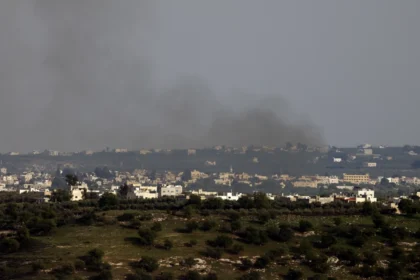
These allegations are linked to an incident that occurred on March 5, when the deputy commander of joint operations, Qais al-Muhammadawi, revealed that an Iraqi force came under heavy aerial fire while investigating a report from a shepherd about suspicious activity in the Najaf desert.
The ensuing clash resulted in the death of one soldier and injuries to two others. Following this, Baghdad filed a formal complaint with the United Nations accusing “foreign forces” (referring to the United States) of carrying out the airstrikes, which facilitated the withdrawal of an unidentified force from the area.
Yarallah’s visit comes at a sensitive time for the region. A temporary truce between Tehran and Washington, brokered by Pakistan, has been in effect since April 8, following a devastating war that erupted on February 28 and resulted in thousands of deaths. While the fighting has subsided somewhat, concerns are growing about the collapse of the ceasefire, especially given reports of Israeli preparations to resume attacks. For this reason, securing Iraq’s desert hinterland has become a top priority to prevent it from becoming an open battleground or a launching pad for operations that violate national sovereignty.