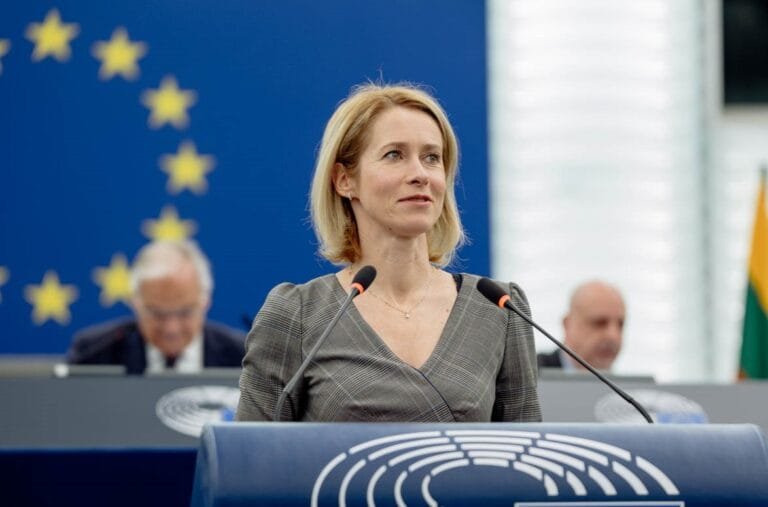
Rabat, Morocco – Relations between the European Union and the Kingdom of Morocco have reached a new historical turning point following the announcement by the bloc’s High Representative for Foreign Affairs and Security Policy, Kaja Callas, of Brussels’ support for the Moroccan autonomy proposal as a serious framework for ending the Sahara conflict.
Callas called for accelerating efforts to conclude a “comprehensive strategic partnership” before the end of this year. This partnership includes unprecedented security, economic, and investment pillars. Callas’s remarks, as reported by EUobserver, came after in-depth talks she held in Rabat on Thursday, April 16, with Moroccan Foreign Minister Nasser Bourita.
The European official praised the renewed diplomatic momentum. She also described recent developments and coordination between the United States and the United Nations as “very encouraging.” This is a clear indication of the international support for the Moroccan position.
The essence of the Moroccan proposal and international support
The Moroccan proposal, which received the backing of the UN Security Council last October, grants the Saharan provinces broad autonomy governed by locally elected legislative, executive, and judicial institutions. However, Rabat retains full sovereignty over defense, foreign policy, and religious affairs. Callas emphasized that the time has come to elevate bilateral relations to a “comprehensive strategic partnership.” This partnership would encompass trade, investment, and migration.
Transcontinental economy and security integration
This momentum reinforces Morocco’s position as the European Union’s leading trading partner in North Africa and a strategic energy supplier.
A key aspect of this economic cooperation is the ongoing work to complete the railway tunnel project under the Strait of Gibraltar. This massive project, estimated to cost between 15 and 20 billion euros, aims to directly connect the African and European continents. On the security front, both sides agreed to launch a high-level security dialogue within the framework of the “Regional Forum on Security in the Mediterranean.”
This dialogue will focus on combating terrorism, strengthening maritime security, and addressing hybrid threats. Brussels believes that Morocco has a leading and pivotal role in these areas to ensure the stability of the Mediterranean region.
This momentum reinforces Morocco’s position as the European Union’s leading trading partner in North Africa and a strategic energy supplier.
A key aspect of this economic cooperation is the ongoing work to complete the railway tunnel project under the Strait of Gibraltar. This massive project, estimated to cost between 15 and 20 billion euros, aims to directly connect the African and European continents. On the security front, both sides agreed to launch a high-level security dialogue within the framework of the “Regional Forum on Security in the Mediterranean.”
This dialogue will focus on combating terrorism, strengthening maritime security, and addressing hybrid threats. Brussels believes that Morocco has a leading and pivotal role in these areas to ensure the stability of the Mediterranean region.
Washington’s shifts and the classification of the “Polisario”
Alongside this European rapprochement, observers are closely watching legislative developments in the United States, where a bill has been introduced in the Senate to designate the Polisario Front as a terrorist organization.
Supporters of the bill, including Senator Ted Cruz, cite reports alleging links between the Front and regional actors such as Hezbollah and Iran.
Rabat hopes that these developments will encourage international powers, including the European Union, to adopt a firmer stance toward the Front. This, in turn, would strengthen Morocco’s position in resolving the manufactured conflict.